
Volcanic eruptions are among the most unpredictable natural hazards affecting aviation. While lava and ash primarily threaten communities near volcanoes, volcanic ash clouds can spread thousands of kilometers from their source, posing a serious risk to aircraft flying at cruising altitudes.
To address this challenge, the International Civil Aviation Organization (ICAO) established the International Airways Volcano Watch (IAVW)—a globally coordinated system designed to monitor volcanic activity, forecast ash cloud movement, and provide timely warnings to the aviation industry.
This article explains how the IAVW works, why it is essential for flight safety, and the organizations involved in protecting aircraft from volcanic ash.
What Is the International Airways Volcano Watch (IAVW)?
The International Airways Volcano Watch (IAVW) is an international operational framework coordinated by ICAO to detect, monitor, forecast, and communicate volcanic ash hazards that could affect aircraft operations.
Rather than being a single organization, the IAVW is a collaborative network involving volcano observatories, meteorological agencies, air navigation service providers, Volcanic Ash Advisory Centres (VAACs), airlines, and pilots.
Its primary objective is to ensure that aircraft receive accurate and timely information about volcanic ash so that flight crews can safely avoid hazardous areas.
Why Is Volcanic Ash Dangerous to Aircraft?
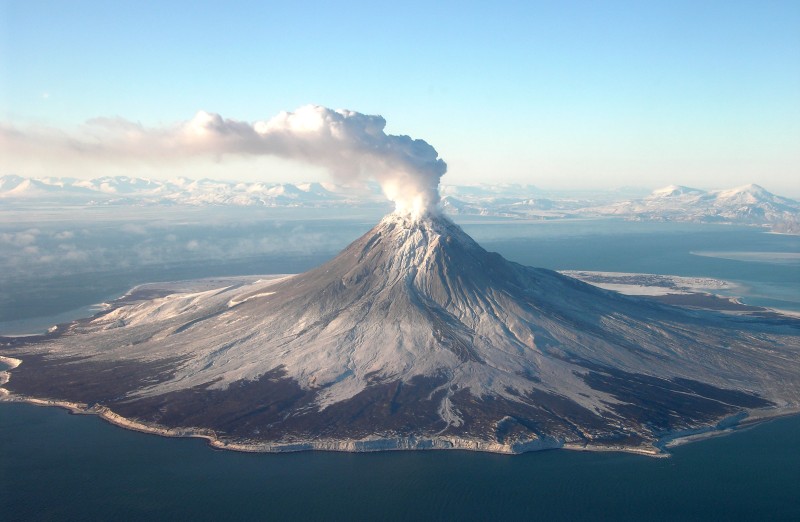
Unlike ordinary smoke or clouds, volcanic ash consists of microscopic particles of rock, minerals, and volcanic glass. These particles are highly abrasive and can remain suspended in the atmosphere for extended periods.
Flying through volcanic ash can result in:
- Engine compressor erosion
- Melting of ash inside turbine engines, leading to engine flameout
- Damage to cockpit windshields
- Blockage of pitot-static systems
- Contamination of air conditioning and environmental control systems
- Reduced visibility for flight crews
One of the greatest challenges is that volcanic ash is often invisible on conventional airborne weather radar, making external monitoring systems essential.
Why Was the IAVW Established?
The need for a coordinated volcanic ash warning system became evident after several aircraft encountered volcanic ash during the 1980s.
One of the most notable incidents occurred in 1982, when British Airways Flight 9, a Boeing 747 flying over Indonesia, lost power in all four engines after entering a volcanic ash cloud. Although the crew successfully restarted the engines and landed safely, the incident highlighted the severe threat posed by volcanic ash.
A similar event occurred in 1989, when KLM Flight 867 lost power in all four engines after flying through ash from Alaska’s Redoubt Volcano.
These incidents prompted ICAO to establish the International Airways Volcano Watch, creating a standardized global system for volcanic ash monitoring and aviation warnings.
How Does the IAVW Work?
The IAVW relies on cooperation among scientific organizations, meteorological services, and aviation authorities worldwide.
The operational process follows a structured sequence:
- A volcano erupts.
- Volcano observatories detect the eruption using seismic instruments, satellite imagery, gas measurements, and visual observations.
- Meteorological Watch Offices (MWOs) assess the impact on aviation.
- Volcanic Ash Advisory Centres (VAACs) analyze satellite data and atmospheric models.
- VAACs issue Volcanic Ash Advisories (VAAs) forecasting ash cloud movement.
- Air navigation service providers and airlines use these advisories to reroute aircraft or implement operational restrictions.
This coordinated workflow enables aviation authorities to respond rapidly to volcanic events, reducing risks to aircraft and passengers.
The Role of Volcanic Ash Advisory Centres (VAACs)
At the core of the IAVW are the Volcanic Ash Advisory Centres (VAACs).
VAACs continuously monitor volcanic activity and produce forecasts showing where ash clouds are expected to travel.
Their responsibilities include:
- Monitoring satellite imagery
- Receiving reports from volcano observatories and pilots
- Running atmospheric dispersion models
- Forecasting ash cloud movement
- Issuing Volcanic Ash Advisories (VAAs)
These advisories are distributed to airlines, meteorological agencies, and air traffic management organizations around the world.
ICAO’s Nine Volcanic Ash Advisory Centres
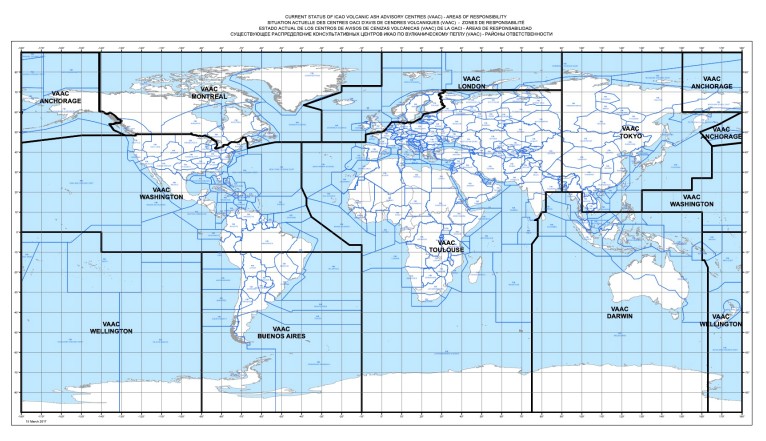
To ensure global coverage, ICAO has designated nine Volcanic Ash Advisory Centres, each responsible for a specific geographic region:
| VAAC | Region |
|---|---|
| Anchorage | Alaska and Arctic |
| Washington | North America and Caribbean |
| Montreal | North Atlantic |
| Buenos Aires | South America |
| London | Northern Europe and Iceland |
| Toulouse | Southern Europe and Mediterranean |
| Darwin | Australia and Indonesia |
| Tokyo | Japan and East Asia |
| Wellington | Southwest Pacific |
Together, these centers provide continuous monitoring of volcanic ash worldwide.
Information Products Issued by the IAVW
Several operational products support aviation decision-making.
Volcanic Ash Advisory (VAA)
Prepared by VAACs, these advisories include:
- Volcano identification
- Time of eruption
- Ash cloud altitude
- Forecast movement
- Expected ash dispersion over the next several hours
SIGMET
Meteorological Watch Offices issue SIGMETs to warn pilots of hazardous weather phenomena affecting flight operations, including volcanic ash.
Volcanic Ash Graphics
Graphical forecasts provide a visual representation of ash cloud location, altitude, and projected movement, making it easier for dispatchers and flight crews to plan safe routes.
NOTAMs
When volcanic activity affects airports or airspace, authorities may issue Notices to Airmen (NOTAMs) describing operational restrictions.
Technologies Behind the IAVW
The IAVW integrates information from numerous scientific and operational sources, including:
- Geostationary weather satellites
- Polar-orbiting satellites
- Volcano observatories
- Seismic monitoring networks
- Ground-based observations
- Pilot reports (PIREPs)
- Numerical weather prediction models
- Volcanic ash dispersion models
Combining these data sources enables forecasters to produce increasingly accurate ash cloud predictions.
The 2010 Eyjafjallajökull Eruption: A Major Test
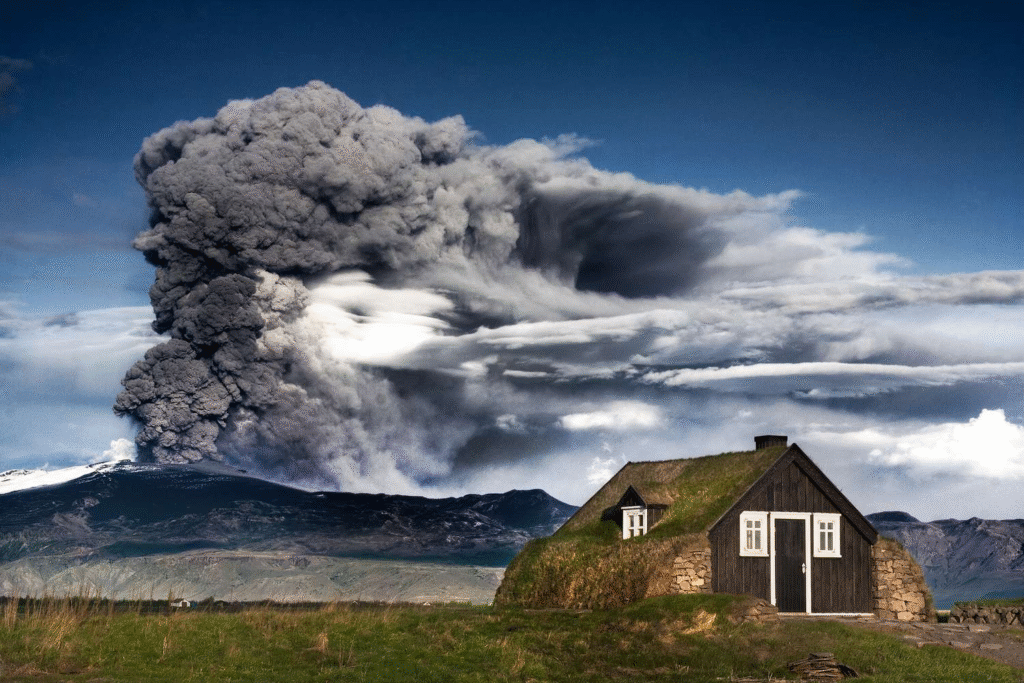
The eruption of Iceland’s Eyjafjallajökull volcano in 2010 demonstrated the importance of the IAVW. Volcanic ash spread across much of Europe, leading to widespread airspace closures.
The event resulted in:
- More than 100,000 flight cancellations
- Approximately 10 million passengers affected
- Significant economic disruption to airlines and airports
Following the eruption, ICAO and aviation authorities refined volcanic ash forecasting methods, improved international coordination, and introduced more risk-based operational procedures.
Continuous Improvements
The International Airways Volcano Watch continues to evolve as forecasting technology advances.
Current improvements include:
- Enhanced satellite detection capabilities
- More accurate volcanic ash dispersion models
- Improved coordination among VAACs
- Digital dissemination of advisory products
- Better integration of uncertainty information into forecasts
These developments help aviation stakeholders make safer and more informed operational decisions.
recommended: METAR – What is it? How to read?
Conclusion
The International Airways Volcano Watch (IAVW) is one of aviation’s most important global safety systems. Coordinated by ICAO, it connects volcano observatories, meteorological agencies, Volcanic Ash Advisory Centres, air traffic services, and airlines to monitor volcanic activity and forecast ash cloud movement.
By providing timely, accurate, and standardized volcanic ash information, the IAVW enables pilots and airlines to avoid hazardous airspace, protecting passengers, crews, and aircraft while minimizing unnecessary disruptions to global air travel.
References and Further Reading:
- https://www.icao.int/sites/default/files/METP/Documents/IAVW-Roadmap-vs-5.1-07-Feb-2023.pdf
- https://community.wmo.int/site/knowledge-hub/governance/sercom/standing-committee-services-aviation/advisory-group-volcanic-science-aviation-applications
- https://www.researchgate.net/publication/266277549_The_International_Airways_Volcano_Watch_IAVW