
Fear of flying, also known as aviophobia, affects millions of people worldwide. For some travelers, it causes mild discomfort, while for others it can lead to complete avoidance of air travel. Although traditional treatments such as Cognitive Behavioral Therapy (CBT) have been widely used, researchers continue to explore alternative methods that may help people manage flight-related anxiety more effectively.
A 2022 study published in NeuroImage: Clinical investigated whether acupoint tapping, a technique that combines physical tapping on specific body points with emotional processing, could help reduce fear of flying. The results were surprisingly promising.
What Is Acupoint Tapping?
Acupoint tapping is a bifocal emotion regulation technique. During the process, individuals focus on a distressing thought or situation while simultaneously tapping specific points on the body, such as the hands, face, and upper torso.
The technique used in the study was known as Process- and Embodiment-focused Psychology (PEP). The underlying idea is that combining emotional exposure with sensory stimulation may help the brain process fear in a healthier way.
How Was the Study Conducted?
Researchers recruited 29 participants who experienced significant fear of flying. During the experiment, participants viewed aviation-related images, general fear-inducing images, and neutral images while undergoing functional magnetic resonance imaging (fMRI).
While viewing some of the images, participants performed a tapping exercise. After the scanning session, they also attended a structured PEP intervention focused specifically on their fear of flying.
The researchers measured both subjective fear levels and brain activity before and after the intervention.
Significant Reduction in Flight Anxiety
The findings showed a substantial decrease in flight-related anxiety after the intervention.
Before the tapping session, nearly 90% of participants met the criteria for fear of flying. Following the intervention, this figure dropped to approximately 24%.
Participants also reported significantly lower levels of emotional distress and anxiety when thinking about flying. These improvements were observed after only a single intervention session, highlighting the potential effectiveness of the technique.
What Happened Inside the Brain?
One of the most interesting aspects of the study involved the brain imaging results.
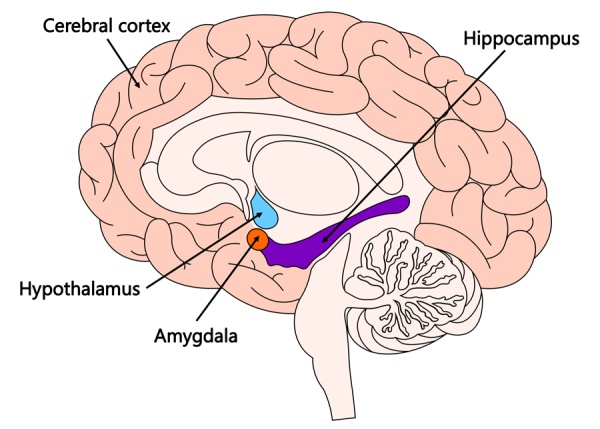
The researchers observed increased activity in the amygdala, a region strongly associated with fear and emotional processing. At first glance, this might seem counterintuitive because many conventional emotion-regulation techniques tend to reduce amygdala activity.
However, the researchers suggest that tapping may not suppress fear. Instead, it may encourage individuals to actively engage with and process fearful emotions while remaining in a psychologically safe state.
At the same time, decreased activity was observed in the hippocampus, a brain structure involved in memory and emotional associations. This finding may indicate a reduced connection between fearful stimuli and previously established fear-related memories.
Why Does This Matter?
Many people with fear of flying rely on avoidance behaviors, such as refusing to travel by air or using medication to cope with anxiety. While these strategies may provide short-term relief, they often do little to address the underlying fear.
The study suggests that tapping-based interventions may help individuals confront and process their fears rather than simply avoiding them. Although more research is needed, particularly with larger participant groups and long-term follow-up studies, the findings offer encouraging evidence that alternative emotion-regulation techniques could play a valuable role in managing aviation-related anxiety.
Final Thoughts
Fear of flying remains one of the most common travel-related anxieties, but advances in neuroscience are helping researchers better understand how the brain responds to fear and how that response can be modified. This study provides evidence that acupoint tapping may reduce flight anxiety and help individuals regulate their emotional reactions more effectively.
While tapping should not be viewed as a replacement for professional treatment, it may serve as a useful complementary tool for passengers seeking new ways to manage fear and regain confidence in air travel.
Recommended: Sandra Bullock and Her Fear of Flying