
In a significant move to improve global aviation safety, the International Civil Aviation Organization (ICAO) and EUROCONTROL have announced a strategic technical integration that will greatly speed up search and rescue (SAR) operations. Through this collaboration, emergency location data transmitted by aircraft will now be delivered directly to the global Location of an Aircraft in Distress Repository (LADR).
This integration allows rescue authorities to access the last known aircraft position within seconds, reducing delays and increasing the chances of locating an aircraft in distress more efficiently than ever before.

What Triggered This Development?
After several high-profile aviation accidents where aircraft were difficult or nearly impossible to locate, ICAO introduced new safety requirements designed to ensure that distress situations can be detected automatically and communicated immediately. One of these requirements is the Autonomous Distress Tracking (ADT) function.
With ICAO’s collaboration with EUROCONTROL, ADT data will now flow directly into LADR, allowing all eligible rescue coordination centers worldwide to access accurate and timely information.
Key Systems and Abbreviations Explained
- ICAO – International Civil Aviation Organization: A United Nations agency responsible for setting global aviation safety, navigation, and operational standards.
- EUROCONTROL – European Organisation for the Safety of Air Navigation: A pan-European intergovernmental organization supporting air traffic management (ATM) and coordinating aviation safety projects across Europe.
- LADR – Location of an Aircraft in Distress Repository: A centralized global platform created by ICAO to store and distribute aircraft distress-location information to authorized rescue authorities worldwide.
- ADT – Autonomous Distress Tracking: A safety function installed on aircraft that automatically sends position updates when the system detects a distress situation such as:
Loss of control, Rapid descent, Structural damage, Loss of communication.
These signals are generated by onboard equipment without pilot input.
What Does This Integration Actually Change?
1. Faster access to precise location
Before this integration, ADT signals needed to pass through several technical checkpoints before reaching a rescue coordination center. Now, once an aircraft’s ADT system detects an emergency, its position is:
- automatically transmitted,
- validated,
- and instantly pushed to the LADR platform.
The time between distress detection and rescue notification is reduced dramatically.
2. Global availability
LADR is accessible to authorized rescue centers worldwide. This means:
- A distress signal over the ocean
- A disappearance in remote airspace
- An aircraft going missing during international flights
…all can be handled consistently and quickly.
3. More reliable data for Search and Rescue (SAR) teams
Instead of fragmented information coming from different systems, all verified distress signals are collected under a single platform.
SAR teams receive:
- last known coordinates
- timestamp of distress
- flight identification
- system-detected conditions
This avoids confusion and saves crucial minutes.
Why Is This Important for Aviation Safety?
Aviation accidents are rare — but when they occur, every second matters.
History has shown that the most challenging part of search and rescue is often the initial detection and correct positioning of the aircraft.
Accidents like:
- AF447 (Air France, 2009)
- MH370 (Malaysia Airlines, 2014)
exposed gaps in global tracking and emergency communication. ICAO’s post-MH370 initiatives, particularly the Global Aeronautical Distress and Safety System (GADSS), were designed to eliminate these weaknesses.
The new LADR–ADT technical integration is one of the most concrete and operational steps taken since then.
How ELT Fits Into the New ADT–LADR System
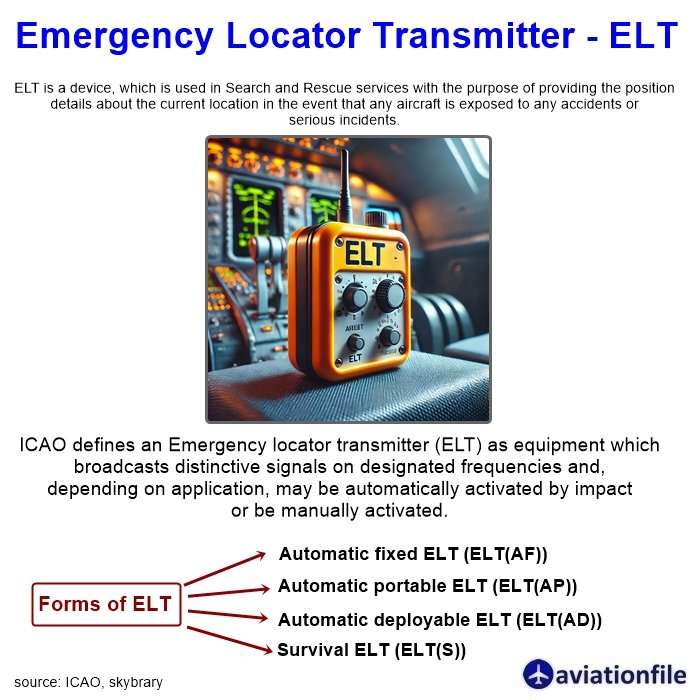
Emergency Locator Transmitters (ELTs) have long served as the primary tool for locating aircraft after an accident, activating on impact and sending distress signals via satellite. The new ADT–LADR integration does not replace ELTs; instead, it adds a proactive layer of protection. While ELTs begin transmitting post-crash, Autonomous Distress Tracking (ADT) can identify abnormal in-flight situations and relay precise position updates directly to LADR in real time. Together, ADT, LADR, and ELTs create a complementary, multi-layered system that accelerates search-and-rescue operations and improves the accuracy of aircraft location during emergencies.
Benefits for Airlines, Pilots, and Passengers
✔ Higher safety levels
Automatic distress tracking ensures that no aircraft goes unlocated for long periods.
✔ Better coordination between countries
Shared global data reduces miscommunication between international rescue teams.
✔ Improved emergency response efficiency
SAR operations can begin earlier, with higher accuracy.
✔ Enhanced public confidence
These steps demonstrate that aviation organizations are continuously improving safety measures.
Recommended Article: 25 March 2009 – Muhsin Yazicioglu Helicopter Crash.
A Strategic Step Toward the Future of Global Aircraft Tracking
With ICAO and EUROCONTROL linking ADT data directly to LADR, the aviation world moves closer to a seamless and unified global distress-tracking network. This partnership not only strengthens international cooperation but also sets a new benchmark for emergency response.
The goal is simple but critical:
To ensure that no aircraft in distress is ever lost again — and that help reaches the scene faster than ever before.
References and Further Reading:
- https://www.icao.int/news/global-aircraft-emergency-signals-now-reach-rescue-services-directly
- https://www.eurocontrol.int/news/global-aircraft-emergency-signals-now-reach-rescue-services-directly
- https://skybrary.aero/articles/global-aeronautical-distress-and-safety-system-gadss
- https://skybrary.aero/articles/autonomous-distress-tracking-adt