
Digital exclusion is often described as “not having internet.” That’s part of it, but it’s rarely the whole story. In many workplaces, people are “connected” on paper while still being excluded in practice—because the obstacles come in layers.
That layered reality is what I mean here by compound (multidimensional) digital exclusion: a situation where more than one barrier (access, skills, confidence, organisational support, usability, governance) combines and reinforces the others, making meaningful digital participation hard or impossible.
This is not a new idea invented for a catchy phrase. The research on digital inequality has long argued that the problem doesn’t end once basic access exists; it deepens into differences in skills, usage, and outcomes. And there is also peer-reviewed work that explicitly uses the language of “compound digital exclusion”, examining how disadvantages in one area often co-occur with disadvantages in others.
Below is a practical, evidence-based explanation of the concept—followed by how it can show up in aviation environments where digital systems are becoming central to safety, efficiency, and resilience.

What “compound” and “multidimensional” mean in digital exclusion
Digital exclusion has multiple dimensions
A well-known way to understand digital exclusion is to treat it as more than access. Researchers describe distinct but connected dimensions such as:
- Material/physical access (devices, connectivity, quality/reliability)
- Motivational access (attitudes, trust, willingness to engage)
- Skills access (technical and information skills; confidence)
- Usage/engagement (what people actually do with technology and how effectively)
This “multiple access” thinking is strongly associated with Jan van Dijk’s work and is widely cited in digital inequality research.
The Digital Divide and Its Impact on Global Air Traffic Management
“Compound” means the barriers stack
Compound digital exclusion is the stacking of barriers. For example:
- Limited system access plus weak training
- Training exists but interfaces are poorly designed
- Good tools but policy/governance blocks data sharing
- Skills exist but confidence is low and support is missing
The key point is that disadvantages are often not isolated. Studies on compoundness show that lacking one type of digital skill or online engagement is often associated with lacking others—and that unequal outcomes can cluster as well.
Why compound digital exclusion matters at work
In the workplace, “digital exclusion” is not just a social issue—it can become a performance and risk issue, because stacked barriers can lead to:
- Slower decisions and bottlenecks
People rely on workarounds, parallel channels, or informal knowledge instead of shared digital tools. - Higher error likelihood
When procedures depend on digital systems, uneven skills and inconsistent use increase variability in how tasks are performed. - Uneven workload and burnout
Digitally confident staff become “human middleware,” compensating for gaps across a team. - Lower return on technology investment
Organisations buy systems but fail to realise benefits because adoption is partial, inconsistent, or fragile.
The “deepening” view of digital inequality captures this well: after basic access is achieved, the real differences can shift to usage and outcomes.
Aviation: why the concept deserves attention now
Aviation is increasingly shaped by digital information flows—surveillance and tracking, surface safety nets, collaborative decision-making, and system-wide information sharing. ICAO’s Global Air Navigation Plan (GANP), for example, frames modernisation through performance-driven, globally harmonised capabilities and implementation planning.
At the same time, aviation is a network industry: uneven implementation and uneven human readiness can create “weak links” where interoperability, predictability, and resilience suffer.
ICAO’s Global Air Navigation Plan (GANP)
Where compound digital exclusion can appear in aviation operations
1) Digital towers and remote tower concepts
Remote/digital tower operations depend on high-quality surveillance/video/data integration, procedures, and controller competence aligned with regulatory guidance. EASA publishes dedicated guidance material for remote tower operations (including operational concepts and training-related considerations in the broader regulatory framework).
Compound exclusion risk pattern:
- Technology installed, but training/standardisation is uneven
- Staffing pressures limit practice time
- Interface complexity reduces confidence
- Result: inconsistent use of features that are intended to enhance situational awareness
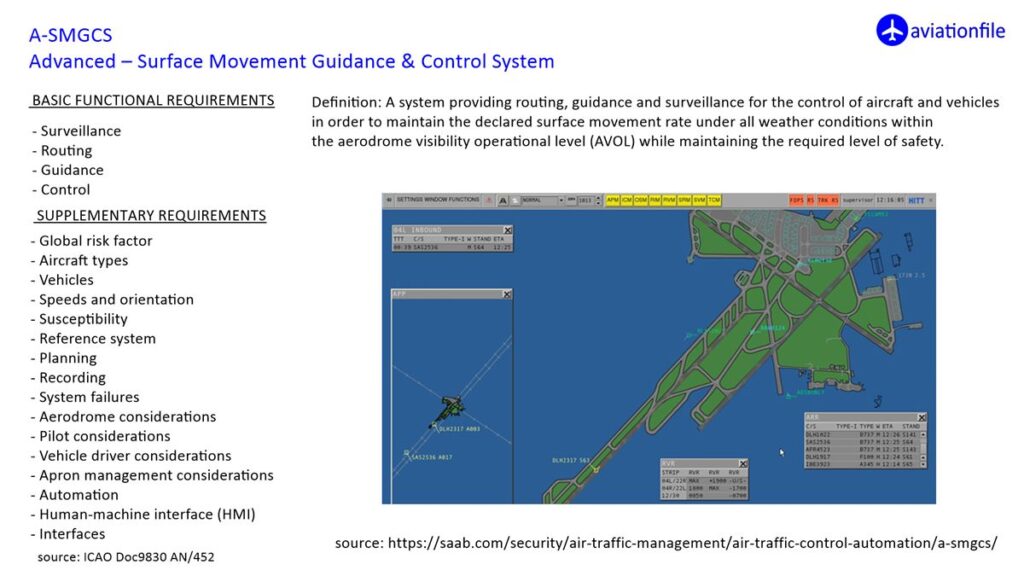
2) Surface movement safety and A-SMGCS-related capabilities
A-SMGCS is defined as a system providing routing, guidance, and surveillance for aircraft and vehicles to maintain surface movement rates under varying conditions while maintaining safety.
Compound exclusion risk pattern:
- Not all airports have the same level of surface surveillance/integration
- Within the same unit, not all personnel develop the same operational fluency
- If procedures assume consistent use, uneven competence becomes an operational variability factor
(Important note: this does not mean the technology is unsafe—rather, that uneven adoption and competence can reduce the consistency of safety benefits.)
3) Airport Collaborative Decision Making (A-CDM)
A-CDM is built around shared milestones, common situational awareness, and coordinated decision-making between stakeholders. EUROCONTROL provides an implementation manual for harmonised A-CDM deployment, and ICAO regions have also produced implementation guides.
Compound exclusion risk pattern:
- Data is available but not trusted or not timely
- Stakeholders have different digital maturity and processes
- Governance and information-sharing agreements lag behind
- Result: partial participation, reduced predictability, and weaker network effects
4) SWIM and “information management as infrastructure”
SWIM is commonly described as standards, infrastructure, and governance enabling ATM information management and exchange between qualified parties through interoperable services.
Compound exclusion risk pattern:
- Technical capability exists in one part of the network
- Another part lacks integration capacity or governance readiness
- People can access information but lack the confidence/skills to use it effectively
- Result: the system behaves like multiple disconnected “information islands.”
What compound digital exclusion looks like in day-to-day aviation work
Here are realistic, non-speculative ways the phenomenon can show up—without assuming any single airport or ANSP is “behind”:
- Parallel channels proliferate: official digital tools exist, but teams rely on phone calls, chat groups, or local spreadsheets because shared systems are hard to use consistently.
- Feature underuse: advanced functions are available but only a subset of staff uses them confidently.
- Training gaps become operational gaps: training is completed, but recurrent practice and scenario-based reinforcement are insufficient for stable proficiency.
- Interoperability gaps become human workarounds: when systems don’t “talk,” people bridge the gap manually—introducing delay and variability.
These are exactly the kinds of layered barriers that “compound” approaches to digital inequality aim to capture.
How organisations can reduce compound digital exclusion (without blaming individuals)
The most useful takeaway from the research is that digital exclusion is not just an individual deficit. It’s often a system outcome created by the interaction of technology, training, support, and organisational choices.
Practical directions that align with the multidimensional view include:
- Design for real operations, not ideal users
Usability and workload fit matter. If a tool is “technically available” but hard to operate under time pressure, exclusion can persist. - Treat competence as a lifecycle, not a one-off course
Recurrent training, scenario refreshers, and mentoring reduce skill drift—especially when systems evolve. - Standardise “minimum digital operating practices”
Agree what “good use” looks like (what must be used, when, and how), so safety benefits are consistent. - Support the network, not only the site
Aviation benefits scale when stakeholders can share and trust information. SWIM and A-CDM succeed when governance and integration keep pace with technology.
Compound (multidimensional) digital exclusion is the practical reality behind many “we have the system, but…” stories. It describes how access, skills, confidence, usability, and organisational support can stack together and limit meaningful digital participation—even in professional settings.
For aviation, where digital modernisation under ICAO GANP direction continues and concepts like remote towers, A-SMGCS, A-CDM, and SWIM shape day-to-day operations, understanding compound exclusion is not academic nitpicking. It’s a useful way to spot hidden fragilities early—before they turn into chronic inefficiency, uneven workload, or inconsistent operational performance.
References and Further Reading:
- https://ijoc.org/index.php/ijoc/article/view/5739
- https://www.utwente.nl/en/bms/vandijk/publications/digital_divide_impact_access.pdf
- https://eprints.lse.ac.uk/45013/1/__libfile_REPOSITORY_Content_Helsper%2C%20E_Corresponding%20fields%20model_Helsper_Corresponding_fields_model_2013.pdf
- https://www.eurocontrol.int/publication/airport-collaborative-decision-making-cdm-implementation-manual