
A hard landing occurs when an aircraft impacts the runway with greater force than in a typical landing. This can happen due to various factors related to weather, pilot control, or mechanical issues. In aviation, the precise management of landings is critical to ensure passenger safety, reduce wear on the aircraft, and maintain operational efficiency. Understanding the causes and risks associated with hard landings is crucial for improving aviation safety standards. This article explores the technical aspects of hard landings, the conditions under which they occur, the risks involved, and strategies for prevention.
What is a Hard Landing?
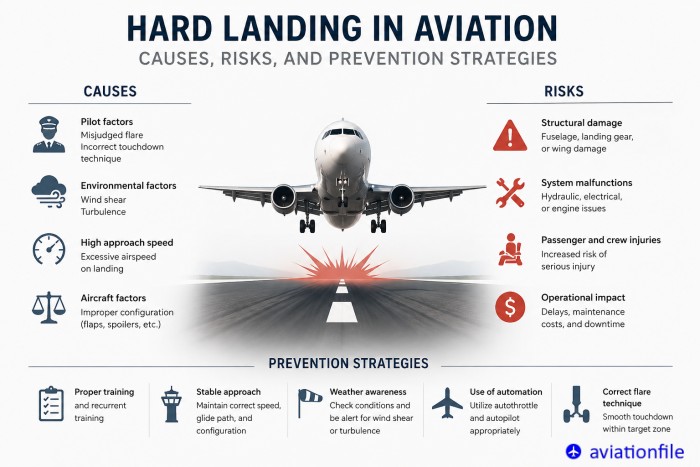
A hard landing occurs when an aircraft touches down with unusually high vertical loads compared with a normal landing. There is no single universal descent-rate or G-force threshold that defines a hard landing for every aircraft type. Manufacturers establish aircraft-specific criteria for determining whether a landing has exceeded normal structural limits or requires a maintenance inspection.
Depending on the aircraft, parameters such as vertical acceleration, vertical speed at touchdown, aircraft weight, pitch and roll attitude, and recorded flight data may be considered. A hard landing does not necessarily mean that the aircraft has been damaged, but an event exceeding specified limits may require a dedicated inspection before the aircraft is returned to service.
Recommended: Bounced Landing and How to Recover
Causes of Hard Landings
- Pilot Error
- Approach Speed Mismanagement: Pilots may approach the runway at incorrect speeds, leading to an unstable descent.
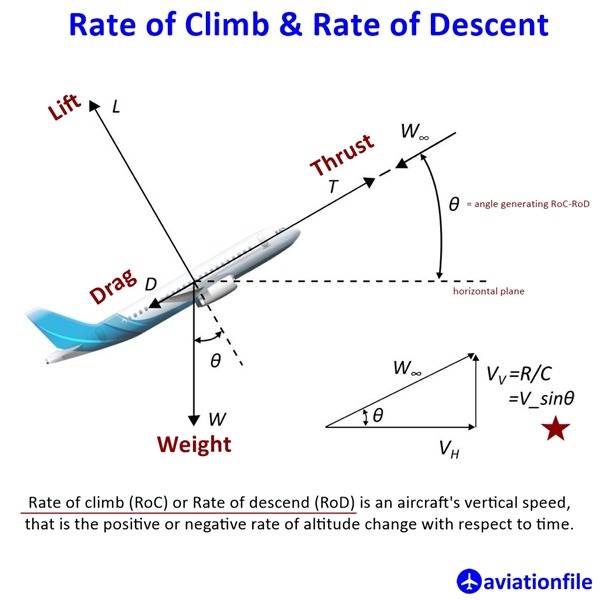
- Improper Flare Technique: The flare is the final phase of landing where the pilot pulls the nose up to reduce the rate of descent. Poor execution increases the likelihood of a hard landing.
- Incorrect Power Settings: Over- or under-throttling can cause improper descent control, leading to harsh landings.
- Environmental Factors
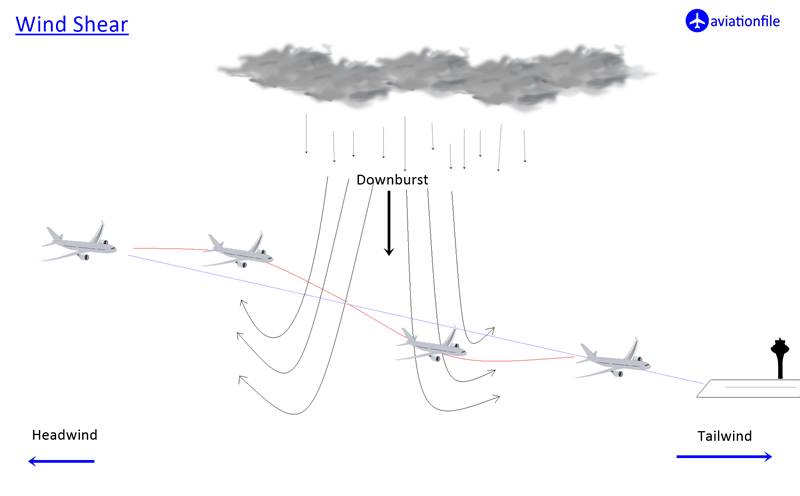
- Wind Shear: Sudden changes in wind direction or speed near the ground can destabilize an aircraft during its final approach, making it difficult to control the descent rate.
- Turbulence: Severe turbulence, especially near the runway threshold, can cause abrupt altitude loss or sudden vertical movement, contributing to hard landings.
- Icing: Accumulation of ice on control surfaces or the wings can affect an aircraft’s handling characteristics, leading to higher descent rates during landing.
- Mechanical Issues
- Autopilot Malfunctions: Failures or abnormalities involving flight-control, autoland, sensor or related aircraft systems can affect approach and landing performance. Modern transport aircraft incorporate monitoring and redundancy designed to detect many such failures, with flight crews required to respond according to aircraft-specific procedures.
- Runway Conditions
- Contaminated Runways: Wet, icy, or snow-covered runways reduce friction, making it difficult to decelerate and control the landing.
- Short Runways: Short runways leave less margin for excessive approach speed, floating or touchdown beyond the intended touchdown zone. Pilots must therefore maintain a stabilized approach and use aircraft-specific landing performance procedures rather than attempting to increase the touchdown descent rate.
Risks of Hard Landings
- Aircraft Structural Damage
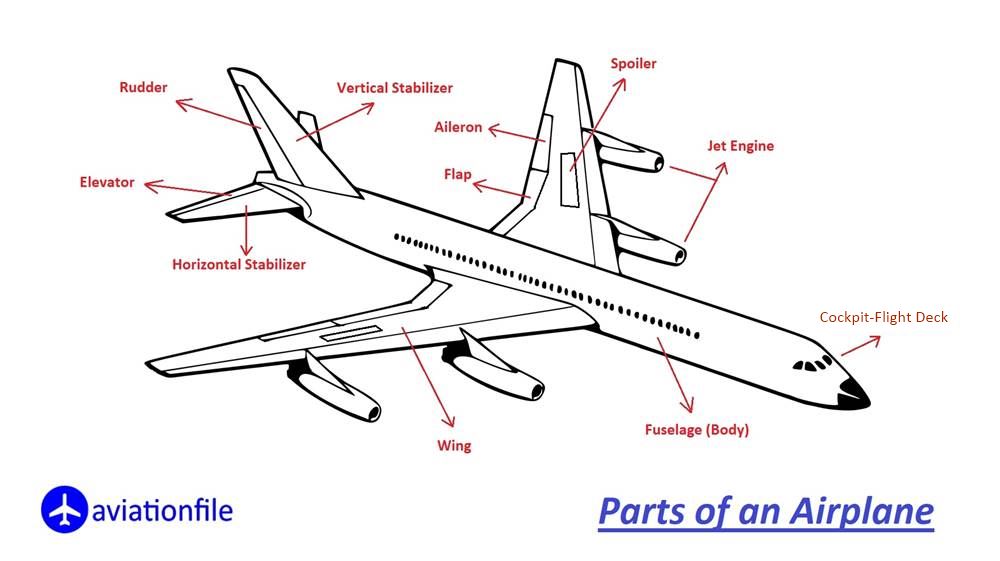
- The most immediate risk is structural damage to the airframe, particularly the fuselage, landing gear, and wing attachment points. A hard landing exerts abnormal loads that can cause cracks, fractures, or deformities in these critical areas.
- Landing Gear Failure
- Repeated hard landings increase the likelihood of landing gear failure, including gear collapse, which could lead to runway excursions or other accidents.
- Passenger and Crew Injury
- Although modern aircraft are designed to withstand hard landings, severe impacts can cause injuries to passengers and crew due to sudden deceleration forces.
- Increased Maintenance Costs
- Hard landings necessitate more frequent inspections and repairs, leading to higher operational costs. They also reduce the service life of the aircraft due to accelerated fatigue in its structure.
- Operational Delays
- Aircraft that experience hard landings often require unscheduled maintenance, leading to flight delays and potential revenue loss for airlines.
Prevention of Hard Landings
- Pilot Training and Proficiency
- Continuous training on landing techniques is essential. Simulators provide pilots with experience in handling different approach conditions, such as crosswinds, turbulence, and low visibility. This enhances their ability to make smooth, controlled landings.
- Pilots should also be trained in the effective use of auto-landing systems, which are particularly helpful in poor weather conditions or at airports with short runways.
- Improved Weather Monitoring Systems
- Advanced weather radar and wind-shear detection systems help pilots anticipate difficult conditions such as turbulence or wind shear, allowing them to adjust their approach well in advance.
- Airports should be equipped with ground-based weather systems that give real-time updates on wind patterns and other environmental factors affecting the runway.
- Regular Aircraft Maintenance
- Ensuring that all mechanical systems, particularly the landing gear and hydraulic systems, are in optimal condition reduces the chances of a hard landing. Proper maintenance can also prevent issues such as autopilot malfunctions during landing.
- Precision Approach Systems
- Instrument Landing Systems (ILS) and modern GPS-based systems provide highly accurate guidance during the approach, ensuring that pilots follow the optimal glide path, reducing the risk of a hard landing.
- These systems are especially valuable during low-visibility conditions, where visual cues are minimal.
- Runway Condition Monitoring
- Regular monitoring of runway conditions helps in timely maintenance, ensuring that issues like debris, ice, or standing water are addressed promptly. Airports with high traffic must ensure that runways are properly grooved or treated to improve traction.
- Automated Landing Systems
- Modern aircraft have advanced automated landing systems. These systems help pilots keep the right approach angle and airspeed. They also assist with flare timing. This reduces human error and the chance of hard landings.
Conclusion
Hard landings present significant risks in aviation, ranging from structural damage to operational delays and increased costs. They occur under various conditions, including pilot error, adverse weather, and mechanical failures. However, with proper pilot training, advanced weather detection systems, rigorous aircraft maintenance, and precision approach aids, hard landings can be largely prevented. As aviation technology continues to advance, so will the tools and strategies available to mitigate the risks associated with hard landings, ensuring safer skies for all.