
In aviation, turbulence refers to irregular and unpredictable movements of air that cause an aircraft to experience sudden changes in attitude, altitude, or airspeed. It occurs when an aircraft flies through disturbed airflow, which can be generated by atmospheric heating, wind shear, terrain, weather systems, or the movement of other aircraft. Turbulence can vary from light and barely noticeable to severe enough to challenge aircraft control and passenger comfort.
Why Does Turbulence Happen?
The air that makes up our atmosphere is always in motion. An airplane takes advantage of this mobility of air while flying. In order for the aircraft to fly stably, the air currents flowing under and over the wings must be regular. When an aircraft encounters irregular air motion or rapidly changing vertical and horizontal wind components, it may experience turbulence. There is not just one reason for turbulence to occur. There are many factors that affect the formation of turbulence. Turbulence names are also shaped by these factors. For example, open-air turbulence, temperature deviation turbulence, and lunge turbulence. Turbulence is still an issue under investigation from an academic point of view. It is therefore difficult to make a clear definition of the factors that cause turbulence.
What Does It Mean to Enter Turbulence?
Entering into turbulence means that the plane is caught in distorted air flow during flight. During the turbulence, the plane may rock and vibrate. Some turbulence are severe and some are very mild. Pilots will talk about the turbulence situation and ask you to fasten your seat belt. In this case, it is very important that you fasten your seat belt. Because severe turbulence can hurt you. Serious turbulence-related injuries are rare compared with the enormous number of passengers carried each year. In 2015, FAA data recorded only 13 serious injuries among passengers and crew on U.S. airlines. Keeping the seat belt fastened while seated remains one of the simplest ways to reduce the risk of injury during unexpected turbulence. (source)
How Long Does Turbulence Last?
The duration of turbulence can vary considerably depending on the atmospheric conditions and the extent of the disturbed airflow. An encounter may last only a few seconds or continue intermittently for several minutes as the aircraft passes through the affected area. Its duration and intensity depend on factors such as wind shear, convection, terrain, and the size and movement of the turbulent air mass.
In December 2015, 21 people were injured on an Air Canada plane due to sudden turbulence.
How Many Different Types of Turbulence Are There? How many different forms of turbulence are subjected to aircraft, do you know? Basically, there are five different types of turbulence.
Clear Air Turbulence
Clear-air turbulence (CAT) is commonly associated with strong wind shear at high altitudes, particularly near jet streams. Jet streams are narrow bands of strong winds in the upper atmosphere, and significant changes in wind speed or direction around them can create conditions favorable for turbulence. CAT may occur without visible warning and is not directly detectable by conventional onboard weather radar because it is generally not associated with the precipitation particles that these systems detect. As a result, flight crews and passengers may sometimes encounter CAT unexpectedly. For this reason, keeping seat belts fastened while seated remains an important precaution against turbulence-related injuries.
Mechanical Turbulence
Mechanical turbulence occurs when airflow is disturbed by surface features such as mountains, hills, buildings, trees, or other obstacles. As wind flows around or over these objects, it can become irregular and turbulent, particularly at lower altitudes. The intensity of mechanical turbulence generally depends on factors such as wind speed, terrain or obstacle characteristics, and atmospheric stability.
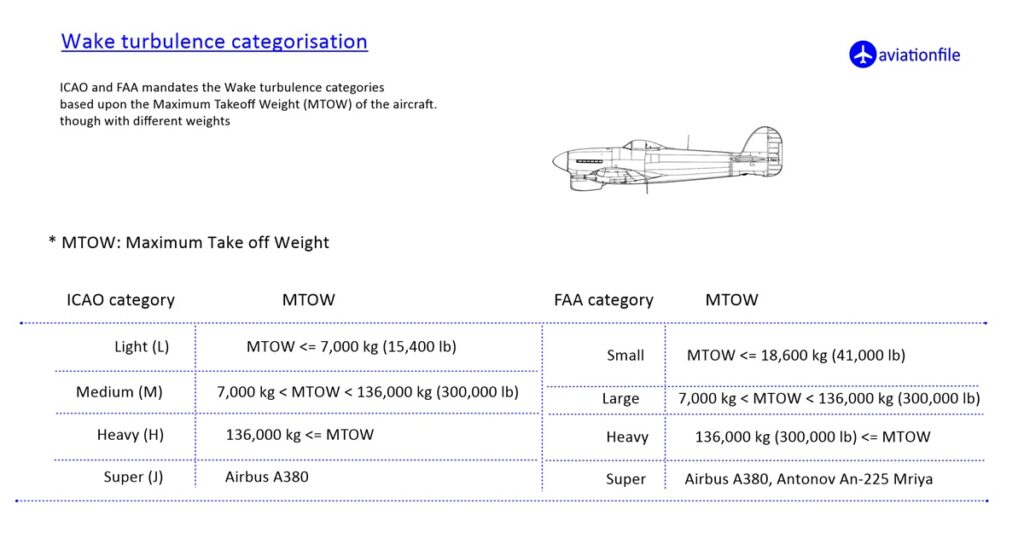
Wake Turbulence
This type of turbulence is the result of circular air movement at the tips of aircraft wings. Especially narrow body aircraft coming from behind wide-body aircraft may be affected.
Convective Turbulence
It occurs as a result of uneven warming of the earth. The rising hot air causes changes in the speed and direction of the wind. Dispatchers who make the flight plan or the pilots who encounter such air currents during the cruise adjust the route in a way that they do not enter into such turbulence.
Mountain Wave Turbulence
It occurs as a result of strong wind currents passing rapidly over the tops or sides of mountains. This type of turbulence is realtively easy to avoid; because the location of the mountains is clear.
| Type of Turbulence | Main Cause / Characteristics |
|---|---|
| Clear-Air Turbulence (CAT) | Mainly associated with strong wind shear at high altitudes, often near jet streams. It may occur without visible warning. |
| Convective Turbulence | Caused by rising and sinking air associated with atmospheric convection, particularly in and around thunderstorms. |
| Mountain-Wave Turbulence | Develops when strong winds flow across mountainous terrain, producing atmospheric waves and potentially strong vertical motions. |
| Mechanical Turbulence | Caused by airflow being disrupted by terrain, buildings, or other surface obstacles, especially at lower altitudes. |
| Wake Turbulence | Produced by aircraft, primarily through wingtip vortices generated as a consequence of lift. |
Turbulence may Increase in the Future
As our planet gets warm with global warming, turbulence are predicted to be more common and stronger in the future. The 2013 report published in the Journal of Nature Climate Change suggests that climate change could increase turbulence from 10% to 40% in the future, especially in Transatlantic flights. In addition, the same report predicts that the frequency of turbulence may increase from 40% to 170%.
A Real-World Example: Singapore Airlines Flight SQ321
A notable example of the potential effects of severe turbulence occurred on May 21, 2024, when Singapore Airlines Flight SQ321, a Boeing 777-300ER traveling from London to Singapore, encountered severe turbulence during the flight. The aircraft diverted to Bangkok, where it landed safely. One passenger died and many others were injured during the event.
The SQ321 incident demonstrated how sudden turbulence can pose a serious risk to occupants, particularly when passengers or crew members are not securely restrained. It also reinforced one of the simplest precautions against turbulence-related injuries: keeping the seat belt fastened while seated, even when the seat belt sign is off. (source)
References and Further Reading:
- https://skybrary.aero/articles/turbulence
- https://www.faa.gov/travelers/fly_safe/turbulence
- https://www.weather.gov/source/zhu/ZHU_Training_Page/turbulence_stuff/turbulence/turbulence.htm
- https://www.bbc.com/news/articles/c8889d7x8j4o
For more articles click.