
On August 31, 1986, a catastrophic mid-air collision over Southern California changed the course of aviation safety. What began as a routine arrival into one of the world’s busiest airspaces ended in tragedy over the quiet residential community of Cerritos, leaving a lasting impact on airspace design, equipment requirements, and collision avoidance technology.
This accident remains one of the most significant events in modern air traffic safety history, not only because of the loss of life, but also because of the safety reforms it triggered worldwide.


The Accident
Aeroméxico Flight 498, a McDonnell Douglas DC-9 operating a scheduled passenger service from Mexico City to Los Angeles with intermediate stops, was on descent toward Los Angeles International Airport (LAX). At the same time, a privately operated Piper PA-28 Cherokee was flying under visual flight rules (VFR) in the Los Angeles basin.
The collision occurred at approximately 6,500 feet in the busy terminal area northeast of LAX. The Piper struck the DC-9 from above and behind, severing part of the airliner’s tail structure. The small aircraft was destroyed instantly.
The DC-9, now uncontrollable, entered a steep descent and crashed into a residential neighborhood in Cerritos. The impact and post-crash fire destroyed several homes and caused significant damage across the area.
All 64 people onboard the DC-9 and the three occupants of the Piper lost their lives. Tragically, 15 people on the ground were also killed. The total death toll reached 82, making it one of the deadliest mid-air collisions involving a commercial airliner in U.S. history.

Airspace and Operational Context
At the time of the accident, the Los Angeles terminal area was protected by a Terminal Control Area (TCA), the predecessor of today’s Class B airspace. Entry into this controlled airspace required specific ATC clearance and an operating transponder.
Investigations later revealed that the Piper had entered the TCA without the required clearance. Although the aircraft was equipped with a transponder, it was not operating in altitude-reporting (Mode C) at the time, limiting the controller’s situational awareness.
The DC-9 was operating under instrument flight rules (IFR) and was in contact with ATC. However, due to the limitations of surveillance and the high traffic density in the area, the controller did not issue timely traffic advisories that might have prevented the conflict.
Ultimately, the accident highlighted the limits of the traditional “see and avoid” concept in congested terminal airspace, especially when aircraft of different performance categories operate in close proximity.
Investigation Findings
The National Transportation Safety Board (NTSB) concluded that the primary cause of the accident was the unauthorized entry of the Piper into the Terminal Control Area and the failure of its pilot to maintain effective visual separation.
Contributing factors included:
- Limitations in radar surveillance and altitude information for non–Mode C targets
- Inadequate traffic advisory and conflict recognition
- The complexity and traffic density of the Los Angeles terminal environment
The investigation also emphasized that relying solely on visual separation was increasingly unrealistic in high-density airspace.
A Turning Point for Collision Avoidance
The Cerritos accident became a catalyst for major regulatory and technological changes that still define modern airspace operations.
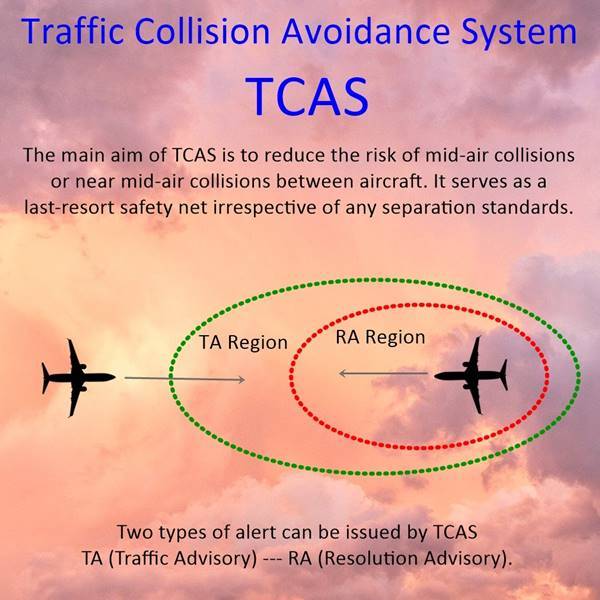
In the years that followed, Traffic Collision Avoidance System (TCAS) equipment became mandatory for most commercial air transport aircraft. TCAS provided pilots with independent traffic alerts and resolution advisories, significantly reducing the risk of mid-air collisions.
At the same time, regulators expanded the requirement for Mode C altitude-reporting transponders in busy terminal areas. This ensured that air traffic controllers could see accurate altitude information for all participating aircraft.
The structure and protection of Class B airspace were also strengthened, with stricter entry requirements and improved pilot awareness initiatives aimed at general aviation operators.
Impact on Modern Air Traffic Safety
Today, the layers of protection in terminal airspace—radar surveillance, Mode C/S transponders, TCAS, and structured Class B procedures—reflect the lessons learned from Cerritos.
Perhaps the most important takeaway is that safety in complex airspace cannot rely on a single barrier. The accident demonstrated the need for a multi-layered safety system, combining pilot responsibility, ATC services, onboard technology, and airspace design.
While mid-air collisions involving commercial airliners have become extremely rare, this level of safety is the result of hard lessons learned from accidents like Cerritos.
Recommended Article: Swiss Cheese Model in Aviation
Remembering the Human Cost
Beyond the regulatory changes and technological advances, the Cerritos disaster remains a deeply human tragedy. Entire families were lost, and a residential community was permanently affected.
A memorial in Cerritos stands today in remembrance of those who lost their lives. Their legacy lives on in the safety systems that protect millions of passengers and airspace users every day.