
Commercial aviation is often regarded as one of the safest and most tightly regulated industries in the world. Pilots undergo extensive training, recurrent checks, simulator sessions, medical examinations, and regulatory oversight throughout their careers.
Yet history has revealed several astonishing cases in which pilots flew commercial airliners for years—sometimes decades—without holding the licenses legally required for their positions.
These incidents raise an uncomfortable question:
How can a person operate within one of the world’s most heavily regulated industries for so long without proper credentials being detected?
Recent allegations involving former Air Canada captain Geoffrey Wall have once again brought this issue into the spotlight. While each case differs in detail, together they expose vulnerabilities in verification systems, organizational oversight, and regulatory processes.
The examples presented in this article are not intended to accuse, criticize, or assign blame to any individual or organization. They are discussed solely as case studies for educational and safety culture purposes, with the aim of promoting learning, risk awareness, and the continuous improvement of aviation safety.
The Air Canada Case: Geoffrey Wall
In June 2026, Canadian authorities announced criminal charges against former Air Canada captain Geoffrey Wall.
According to investigators, Wall allegedly served as an airline captain between 2009 and 2025 without holding the Airline Transport Pilot Licence (ATPL) required under Canadian regulations for command of large commercial aircraft. Authorities claim he flew more than 900 domestic and international flights during this period. The case is particularly unusual because Wall reportedly held a valid Commercial Pilot Licence (CPL), meaning he was legally qualified to fly aircraft but allegedly lacked the higher-level certification required to serve as captain of an airline transport operation. Air Canada emphasized that the pilot successfully completed recurrent simulator training every six months and annual flight checks, and therefore operational flying competence was regularly assessed. However, the airline acknowledged that licensing remains a critical layer of aviation safety.
The allegations suggest that the issue was not an inability to fly the aircraft, but rather a failure in credential verification and regulatory compliance.
Thomas Salme: Europe’s Most Famous “Fake Pilot”
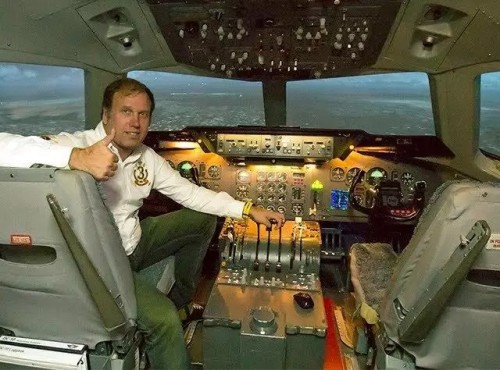
Long before the Air Canada investigation, Europe witnessed one of the most remarkable pilot fraud cases in aviation history. Thomas Salme, a Swedish citizen, worked as a commercial airline pilot for approximately thirteen years despite not possessing a valid commercial pilot license. Beginning in the late 1990s, Salme reportedly used forged credentials to secure employment with several airlines, eventually flying Boeing 737 aircraft and serving in airline operations for more than a decade. What made the case particularly shocking was how simple some of the forged documentation appeared to be. Salme later stated that many employers accepted the documents without conducting comprehensive verification checks. His career ended in 2010 when Dutch authorities became suspicious during a routine inspection at Amsterdam Schiphol Airport. After the fraud was exposed, Salme admitted that the licensing documents were fabricated.
The case became a textbook example of how organizations can sometimes place excessive trust in submitted credentials rather than independently validating them.


South African Airways and the William Chandler Affair
Another notable example emerged in South Africa. William Chandler reportedly worked for South African Airways (SAA) for roughly twenty years before investigators discovered irregularities in his qualifications.
Like the Air Canada case, Chandler reportedly possessed a valid Commercial Pilot Licence but lacked the Airline Transport Pilot Licence required for the role he was performing. The issue came to light after an investigation linked to an in-flight incident involving an Airbus A340. Subsequent reviews revealed concerns regarding the authenticity of his licensing documentation. SAA later emphasized that Chandler had successfully completed operational training and safety checks throughout his career. Nevertheless, the airline pursued legal action, arguing that his employment had been obtained through fraudulent representations. The incident prompted significant scrutiny of pilot credential verification processes within South African aviation.
Recommended: What is a PIREP (Pilot Report) in Aviation?
A Common Pattern Across All Three Cases
At first glance, these cases appear different. One occurred in Canada, another in Europe, and another in Africa. The individuals involved worked for different airlines under different regulatory systems. However, several striking similarities emerge.
1. The Pilots Could Actually Fly
Perhaps the most surprising aspect is that none of these individuals were complete impostors with no aviation experience. In all major cases, the pilots possessed substantial flying skills and operational knowledge. They successfully passed simulator checks, recurrent evaluations, and line checks for extended periods. This distinguishes these cases from fictional portrayals where an untrained person somehow enters an airline cockpit. The issue was not a lack of flying ability. The issue was a lack of legally required authorization.
2. Verification Failed More Than Training
Aviation organizations invest enormous resources in training and evaluating pilot performance. Ironically, the weakness in these cases appears to have been administrative verification rather than flight competency assessment. Organizations repeatedly confirmed that the pilots could operate aircraft safely during evaluations, while the authenticity of their qualifications received less scrutiny.
3. Fraud Survived Because It Became Routine
Many investigations suggest that once an employee is accepted into a system, assumptions begin to replace verification. A pilot who has worked for years without incident is often viewed as trustworthy. Over time, organizations may become less likely to question existing credentials because the individual has already established a successful operational record. This phenomenon is sometimes called “normalization of trust”—a condition in which repeated success reduces skepticism.
| Pilot | Country | Airline / Operator | Period | Duration | Main Issue | Aircraft Type(s) | Outcome |
|---|---|---|---|---|---|---|---|
| Geoffrey Wall | Canada | Air Canada | 2009–2025 | ~17 Years | Missing ATPL | Various Airliners | Charged |
| Thomas Salme | Sweden | Multiple Airlines | 1997–2010 | ~13 Years | Forged License | Boeing 737 | Arrested |
| William Chandler | South Africa | South African Airways | ~1990s–2010 | ~20 Years | License Fraud | Airbus A340, Others | Dismissed |
| Pakistan Licensing Scandal | Pakistan | Multiple Airlines | Exposed in 2020 | Several Years | Exam Fraud | Various Aircraft | Suspensions |
| Bangladesh License Investigation | Bangladesh | Biman Bangladesh Airlines | Exposed in 2026 | Under Investigation | Record Falsification | Various Aircraft | Investigation |
The Swiss Cheese Model Perspective
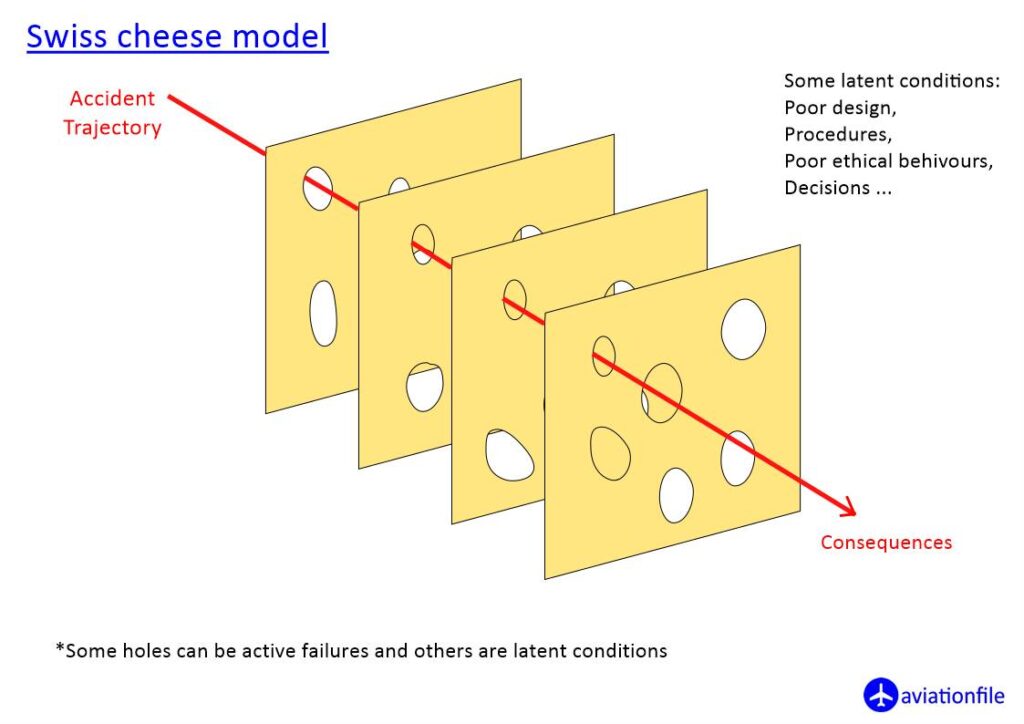
These incidents are excellent examples of James Reason’s Swiss Cheese Model of accident causation. In aviation, safety depends on multiple independent barriers:
- Licensing requirements
- Regulatory oversight
- Airline hiring procedures
- Recurrent training
- Simulator evaluations
- Medical certification
- Internal audits
The model assumes that no single barrier is perfect. Normally, if one layer fails, another layer catches the problem. In these pilot licensing scandals, the remarkable aspect is that several layers failed simultaneously. Hiring departments accepted credentials. Verification processes did not identify inconsistencies. Regulatory systems did not immediately detect irregularities. Internal audits missed warning signs. Only years later did one of the defensive layers finally identify the issue. Although no major accidents resulted from these cases, they demonstrate how organizational weaknesses can align in unexpected ways.
Why These Cases Matter
The significance of these incidents extends beyond individual wrongdoing. They challenge assumptions about how organizations manage trust, verification, and compliance. Modern aviation increasingly relies on digital records, centralized databases, and automated verification systems. As a result, many regulators and airlines have strengthened credential authentication procedures following these scandals.
The lesson is clear:
Technical competence alone is not enough. Aviation safety depends equally on ensuring that every individual performing a safety-critical role possesses the qualifications, authorizations, and regulatory approvals required for that position.
Conclusion
The cases of Geoffrey Wall, Thomas Salme, and William Chandler are among the most extraordinary credential fraud stories in aviation history. What makes them remarkable is not merely the deception itself, but the fact that it persisted within one of the most regulated industries on Earth. Each case revealed weaknesses in oversight systems that were designed to prevent exactly such situations. For aviation professionals, these stories serve as a reminder that safety is not only about aircraft, procedures, and training. It is also about verification, accountability, and ensuring that every layer of the system functions as intended. Because in aviation, trust is important—but verification is essential.
References and Further Reading:
- https://www.bbc.com/news/articles/cwyle05v0ylo
- https://www.abc.net.au/news/2019-03-02/pilot-with-bogus-credentials-charged-airline-seeking-millions/10864524
- https://www.news.com.au/travel/travel-updates/fake-pilot-thomas-salme-says-passengers-were-never-at-risk/news-story/01106e38607460f70b1912c870fb5177