
Air Traffic Control (ATC) is a cornerstone of global aviation, ensuring the safe and efficient movement of aircraft through complex airspace. ATC professionals shoulder immense responsibility, where a single decision can be the difference between safety and disaster. Given this critical role, adherence to a robust code of conduct and ethical principles is paramount. This article delves into the ethical dimension of ATC, exploring the challenges, real-life examples, and the framework that guides these aviation guardians.
What is a Code of Conduct?
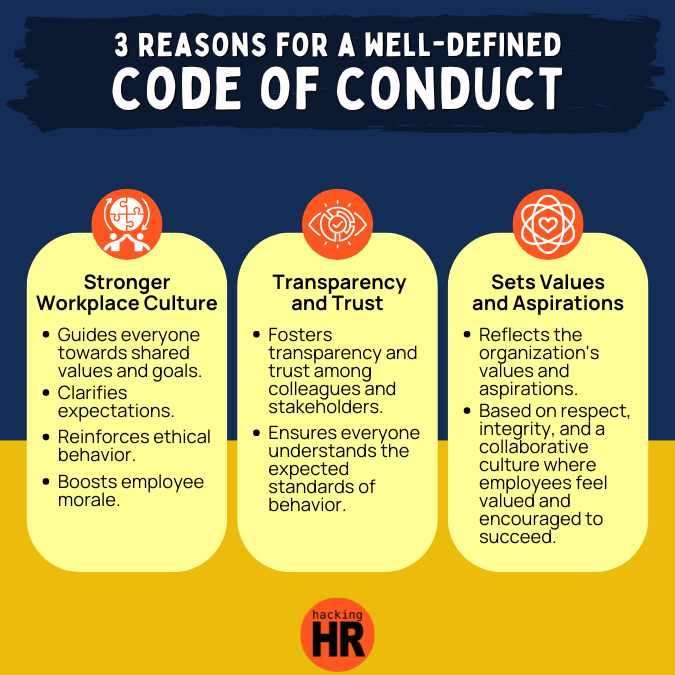
A code of conduct is a set of guidelines that outlines the expected behaviors and ethical standards for individuals within a specific profession or organization. It serves as a foundational framework to ensure consistency, accountability, and professionalism. In the context of ATC, the code of conduct emphasizes safety, integrity, and operational efficiency, while fostering a culture of trust and respect. By adhering to these principles, air traffic controllers can navigate the complexities of their role with clarity and ethical integrity.
The Role of Ethics in ATC
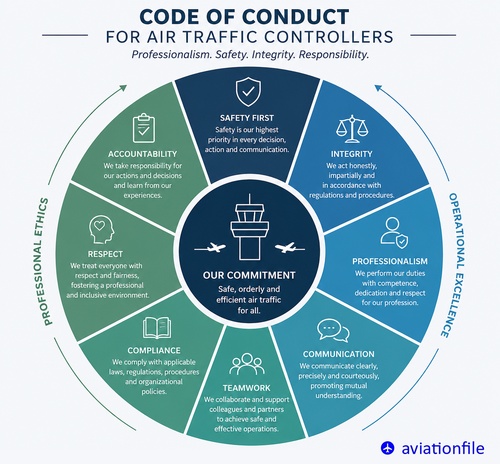
Ethics in ATC is not just about compliance with rules; it’s about fostering trust, accountability, and professionalism. Controllers must maintain impartiality, prioritize safety above all, and exercise sound judgment under high-pressure situations. The ethical framework in ATC encompasses:
- Safety First: Ensuring the safety of passengers, crew, and the public is the highest priority.
- Integrity: Controllers must remain honest, transparent, and unbiased in their decision-making.
- Competence: Continuous learning and skill development are ethical obligations to maintain proficiency.
- Impartiality: Avoiding favoritism or external influence is critical for equitable service.
- Confidentiality: Safeguarding sensitive flight and operational data is a vital ethical responsibility.
Ethical Dilemmas in ATC
Despite rigorous training and guidelines, ATC professionals face ethical dilemmas in their day-to-day operations. Some common scenarios include:
- Balancing Efficiency and Safety: Controllers often have to balance operational efficiency with safety. For instance, when managing congested airspace, pressure to reduce delays may conflict with safety margins.
- Dealing with Fatigue: ATC is a demanding profession with long hours and high mental strain. Reporting fatigue can be stigmatized, yet it is an ethical responsibility to ensure one’s capacity to perform safely.
- Emergency Situations: Controllers may encounter emergencies requiring split-second decisions. Ethical principles demand prioritizing lives over operational norms.
- Communication Challenges: Miscommunication or incomplete information can lead to ethical quandaries, especially when language barriers or technical issues arise.
Air Traffic Controller Fatigue: A Review of Academic Publications
Real-Life Ethical Challenges in ATC
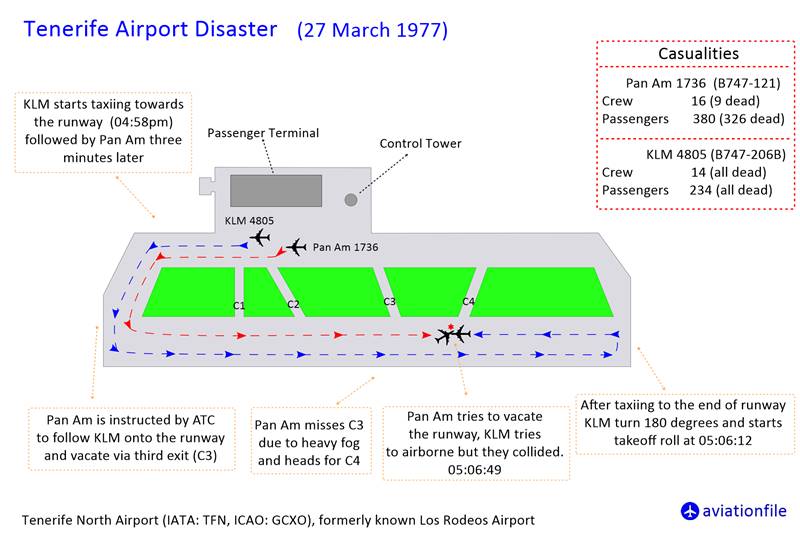
- Tenerife Airport Disaster (1977): The deadliest aviation accident in history involved a collision between two Boeing 747s on the runway of Los Rodeos Airport. Miscommunication between the tower and pilots, coupled with assumptions and procedural lapses, played a significant role in the tragedy. This incident underscores the ethical obligation for clear, precise communication.
- Mid-Air Collision Over Überlingen (2002): A collision between a Bashkirian Airlines Tupolev Tu-154 and a DHL Boeing 757 highlighted the ethical dilemma of reliance on automated systems versus human judgment. The ATC controller faced immense pressure and was working alone, emphasizing the need for adequate staffing and support.
- New York ATC 9/11 Response (2001): During the 9/11 attacks, controllers demonstrated extraordinary ethical decision-making under unprecedented conditions. Balancing the need to ground aircraft swiftly while managing panic showcased their commitment to safety and professionalism.
Framework for Ethical Conduct in ATC
To ensure ethical integrity, ATC authorities and organizations implement a comprehensive code of conduct. Key components include:
- Training and Awareness: Regular training on ethical decision-making and situational awareness.
- Whistleblower Protections: Encouraging reporting of unethical behavior without fear of retaliation.
- Fatigue Management Policies: Implementing systems to mitigate fatigue and promote wellness.
- Technological Support: Leveraging tools to reduce human error and enhance decision-making.
- Audits and Oversight: Continuous monitoring and evaluation to uphold ethical standards.
The Role of Just Culture in Air Traffic Control
Modern aviation safety philosophy strongly supports the concept of Just Culture. In air traffic control, this approach encourages controllers and aviation professionals to report operational errors, safety concerns, and procedural deviations without fear of unfair punishment. The primary goal is not to assign blame, but to identify underlying risks and improve overall system safety.
A strong Just Culture environment promotes transparency, trust, and continuous learning within ATC organizations. Controllers are more likely to report incidents, communication errors, workload-related issues, or operational hazards when they know the focus will remain on safety improvement rather than individual punishment. However, Just Culture does not eliminate accountability. Deliberate violations, negligence, or reckless behavior still remain unacceptable within professional aviation operations.
In safety-critical environments such as air traffic control, maintaining a balance between accountability and open reporting is essential for strengthening aviation safety and operational resilience.
The Human Element in ATC Ethics
While technology plays a significant role in modern ATC systems, the human element remains central. Controllers’ ethical conduct stems from their personal values, training, and organizational culture. Encouraging open dialogue, peer support, and mentorship can reinforce ethical behavior.
Ethics Beyond Individual Responsibility
Modern aviation ethics is not limited to individual behaviour alone. In air traffic control, organizational culture, staffing levels, training quality, fatigue management, and reporting systems also influence operational performance and decision-making. Today’s aviation safety philosophy increasingly focuses on how the system supports human performance, rather than viewing safety issues solely as individual mistakes.
Airbus Code of Conduct Report: Airbus Code of Conduct
Boeing Code of Conduct Report: Boeing Code of Conduct
Conclusion
The field of Air Traffic Control is inherently ethical, requiring a steadfast commitment to principles that prioritize safety, integrity, and professionalism. Real-life incidents serve as reminders of the critical role ethics play in decision-making. By fostering a culture of accountability and continuous improvement, the ATC community can navigate challenges and uphold the trust placed in them by millions of passengers daily.
References and Further Reading:
ICAO – International Civil Aviation Organization — https://www.icao.int
EUROCONTROL – European Organisation for the Safety of Air Navigation — https://www.eurocontrol.int
CANSO – Civil Air Navigation Services Organisation — https://canso.org
IFATCA – International Federation of Air Traffic Controllers’ Associations — https://www.ifatca.org
FAA – Federal Aviation Administration — https://www.faa.gov
NATS – UK Air Navigation Service Provider — https://www.nats.aero
NAV CANADA — https://www.navcanada.ca
DFS Deutsche Flugsicherung — https://www.dfs.de
DHMİ – Devlet Hava Meydanları İşletmesi — https://www.dhmi.gov.tr