
What Is the Dew Point?
The dew point is the temperature at which the air becomes fully saturated with moisture and can no longer hold additional water vapor. When the air cools to this temperature, water vapor condenses into tiny droplets—forming dew, fog, mist, or low clouds.
In simple terms:
➡️ Dew point tells you how humid the air truly is.
A higher dew point means a more humid atmosphere, while a lower dew point indicates drier air.
Because dew point represents actual moisture content (unlike relative humidity, which changes with temperature), it is one of the most reliable indicators of weather behavior and visibility changes.

Why Dew Point Matters
Understanding dew point helps meteorologists and pilots assess:
- Fog and mist formation
- Atmospheric saturation
- Low cloud development
- Visibility levels
- Cloud base heights
- General humidity and comfort level
It is a small number but extremely powerful in predicting fast-changing weather conditions.
Dew Point in Aviation
In aviation, dew point is a critical weather parameter that influences visibility, aircraft performance, safety margins, and preflight decision-making.
1. Dew Point in METAR and TAF Reports
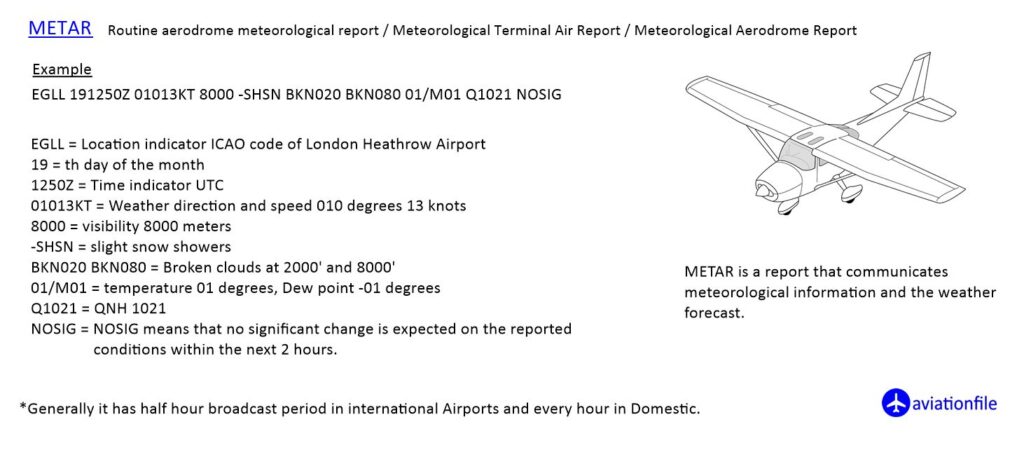
Every METAR includes dew point, expressed as temperature/dew point (e.g., 18/12).
Example:
METAR LTFM 101050Z 17008KT 9000 FEW020 20/14 Q1016
Here:
- Temperature: 20°C
- Dew point: 14°C
Pilots use this difference (T − Td) to understand humidity and anticipate visibility issues.
2. Temperature–Dew Point Spread (T–Td Spread)
The closer the temperature is to the dew point, the higher the likelihood of:
- Fog
- Mist
- Low-level stratus clouds
- Dew formation on surfaces
A 2°C spread or less often signals that fog formation is highly likely, especially at night or during calm-wind conditions. This is crucial for:
- Approach planning
- Takeoff visibility checks
- Alternate selection
- Avoiding delays and diversions
3. Estimating Cloud Base Height
Pilots often estimate cloud base using dew point with a simple rule of thumb:
Cloud base (AGL) ≈ (Temperature − Dew Point) × 400 ft
Example:
T = 20°C, Td = 15°C
Difference = 5°C
Cloud base ≈ 2000 ft AGL
This helps VFR pilots determine if conditions meet required minima.
4. Dew Point and Aircraft Performance
High dew point means higher humidity, which reduces air density. Lower air density negatively affects:
- Takeoff distance
- Climb performance
- Engine power (especially piston and turboprop engines)
Hot, humid days — especially at sea-level coastal airports — can significantly degrade performance and extend takeoff rolls.
5. Dew Point and Carburetor Icing
For piston aircraft with carburetors:
- High moisture + mild temperatures = elevated carb icing risk
Carburetor ice can form even in temperatures up to 20°C when the dew point is also high. Pilots monitor dew point to evaluate when to apply carb heat.
6. Fog and Low Visibility Prediction
Fog commonly forms when:
- Air temperature cools at night
- It approaches the dew point
- Winds are calm
If temperature falls toward the dew point, fog can develop rapidly. This directly influences:
- Landing and takeoff minima
- Runway Visual Range (RVR)
- Low Visibility Procedures (LVP)
- Holding patterns or diversions
This makes dew point one of the most important fog predictors in aviation.
Why Dew Point Is Essential for Pilots
Dew point helps pilots:
- Interpret METAR/TAF weather correctly
- Predict fog before it forms
- Estimate cloud bases
- Understand visibility changes
- Evaluate aircraft performance impacts
- Improve safety during critical phases of flight
It is a fundamental element of weather analysis and contributes directly to safer and more predictable flying.
Final Words
Dew point is not just a meteorological term — it is a vital tool for pilots and aviation professionals. From assessing humidity levels to predicting fog and managing aircraft performance, dew point provides crucial insights that support safe and efficient aviation operations. Understanding it allows pilots to make smarter decisions long before weather conditions deteriorate.