
One of the factors that play a role in passenger comfort when traveling by plane is undoubtedly the size of the windows. Larger airplane windows allow more natural light into the aircraft. In this way, the interior of the cabin becomes more spacious. Relatively large windows can be beneficial, especially for people with a fear of flying or being indoors (claustrophobia). In addition, windows are also important for passengers who want to enjoy the unique view outside.
So, do you know which passenger airplane windows are the widest? Let’s take a look at the window sizes of some passenger planes.
B787 – Largest Window
The Boeing 787 Dreamliner ranks first in this regard, with its 27.2 cm x 46.7 cm (10.7 inch x 18.4 inch) windows. Boeing 787 is followed by other Boeing aircraft.

The Boeing 777 takes second place with its 25.4 cm x 38.1 (10 inches x 15 inches) windows. The same size windows were also used in Boeing 767-400 and Boeing 747-8 type (upper floor) aircraft. On the other hand, another leading aircraft manufacturer Airbus prefers narrower designs in window size design.
A220 – Airbus Aircraft with the Largest Window
The largest windowed aircraft in Airbus’ portfolio is A220 type regional jets. A220’s window size is 28 cm x 40.6 cm (11 inches x 16 inches).
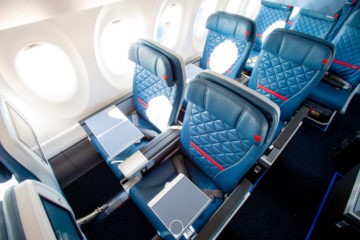
However, the A220 is not an aircraft originally designed by Airbus. As will be remembered, Airbus purchased the aircraft production program named CSeries from Canadian aircraft manufacturer Bombardier in 2017 and named CS type aircraft A220.
Among the aircraft designed by Airbus itself, the A350 has the largest window. The A350’s windows measure 24.1 cm x 34.3 cm (9.5 inches x 13.5 inches). When we compare the A350 aircraft to its direct competitor 787, the A350’s windows are clearly smaller.
There is a similar situation with Airbus’ other wide-body product, A330. The A330’s windows measure 22.9 cm x 31.2 cm (9 inches x 12.3 inches).
At this point, you might think of Airbus’ giant plane A380. With windows slightly larger than the A330, the A380 lags far behind the Boeing 777 and 787.
Boeing 777X: Larger Windows and Better Views
The Boeing 777X features larger passenger windows than previous Boeing 777 models. The windows are also positioned higher on the fuselage, providing passengers with improved outside visibility and a brighter cabin environment. These enhancements are part of Boeing’s efforts to improve passenger comfort on long-haul flights and continue the industry’s trend toward larger aircraft windows.
| Rank | Aircraft | Window Size | Notes |
|---|---|---|---|
| 1 | Boeing 787 Dreamliner | 10.7 × 18.4 in (27.2 × 46.7 cm) | Largest passenger windows among commercial airliners currently in service. |
| 2 | Airbus A220 | 11 × 16 in (28.0 × 40.6 cm) | Largest windows of any single-aisle commercial aircraft. |
| 3 | Boeing 777X | 162 sq in (1,045 cm²) window area | Boeing states the windows are approximately 29% larger than those of the Airbus A350 and positioned higher on the fuselage. Exact dimensions have not been publicly released. |
| 4 | Boeing 777-300ER | 10 × 15 in (25.4 × 38.1 cm) | Among the largest windows on a traditional wide-body airliner. |
| 5 | Airbus A350 | 9.5 × 13.5 in (24.1 × 34.3 cm) | Largest windows in the Airbus wide-body family. |
| 6 | Airbus A330 | 9 × 12.3 in (22.9 × 31.2 cm) | Larger than many earlier-generation commercial aircraft windows. |
Why Larger Aircraft Windows Matter
Larger aircraft windows can help reduce the feeling of confinement during a flight. By allowing more natural light into the cabin and providing a wider outside view, they create a greater sense of openness for passengers. For individuals who experience mild claustrophobia or anxiety while flying, larger windows may make the cabin environment feel less enclosed and more comfortable, especially on long-haul journeys.
Recommended: How to Overcome Fear of Flying
Navigating Air Travel with Claustrophobia
Claustrophobia, the fear of enclosed or confined spaces, can be a significant challenge for individuals who travel by air. The confined space of an airplane cabin, combined with the lack of control over the environment, can trigger anxiety and panic attacks in claustrophobic individuals. However, there are several strategies that can help to manage claustrophobia during air travel. Choosing a seat with ample legroom and aisle access, practicing relaxation techniques, and informing the flight crew of one’s claustrophobia can all contribute to a more comfortable flying experience.
References
- “Claustrophobia and Flying: How to Manage Your Fear” by Verywell Health: https://community.southwest.com/t5/Travel-Policies/Fear-of-flying-after-9-years-do-to-claustrophobia-and-Anxiety/td-p/139967
- “Flying with Claustrophobia” by Fear of Flying: https://www.quora.com/How-can-I-overcome-my-claustrophobia-related-fear-of-flying-due-to-not-being-able-to-get-off-the-airplane-once-its-in-the-air-I-have-no-fear-of-the-safety-of-the-plane-so-statistics-about-safety-dont-reassure-me
- “Claustrophobia and Air Travel” by Anxiety Coach: https://www.mirror.co.uk/travel/cheap-flights/flying-phobia-coach-reveals-peoples-28668409
For more articles click.