
The Boeing 737 MAX is the fourth major generation of the Boeing 737 family, developed and manufactured by Boeing Commercial Airplanes, a division of The Boeing Company. Designed as a narrow-body, single-aisle aircraft, the 737 MAX succeeded the Boeing 737 Next Generation (NG) family. Equipped with more fuel-efficient CFM International LEAP-1B engines, aerodynamic improvements, and updated systems, the aircraft was developed to compete with the Airbus A320neo family in the short- and medium-haul commercial aviation market.
Boeing officially announced the 737 MAX program on August 30, 2011. The aircraft completed its maiden flight on January 29, 2016, and the Boeing 737 MAX 8 received certification from the United States Federal Aviation Administration (FAA) in March 2017. The first 737 MAX aircraft was delivered to Malindo Air in May 2017, marking the beginning of commercial operations for the new generation of Boeing’s best-selling narrow-body aircraft family.
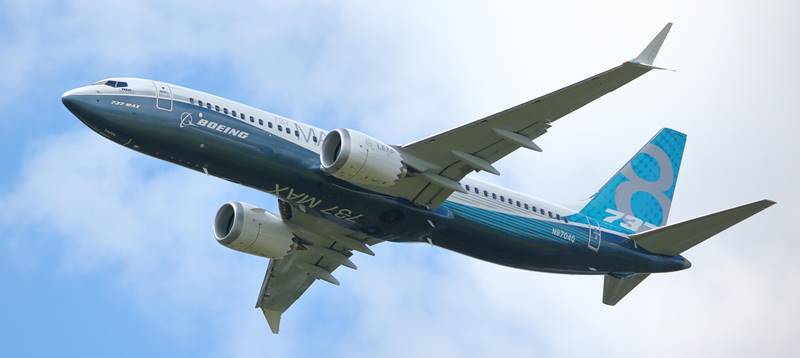
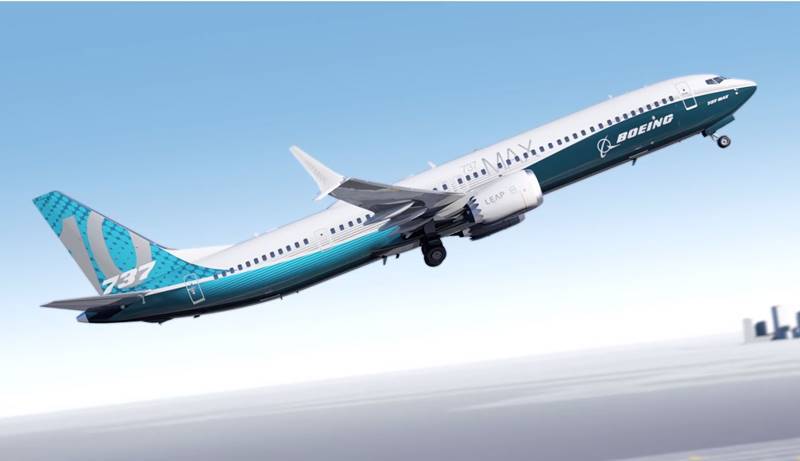
The Boeing 737 MAX retains the basic fuselage design and overall configuration of earlier Boeing 737 generations while incorporating significant technological and aerodynamic improvements. These include more fuel-efficient CFM International LEAP-1B engines, distinctive Advanced Technology winglets, structural modifications, and updated flight systems. The larger engines required changes to their installation and positioning, contributing to differences in the aircraft’s aerodynamic characteristics compared with previous 737 models.
The Boeing 737 MAX family consists of four main variants: the MAX 7, MAX 8, MAX 9, and MAX 10. The MAX 8 also includes the higher-density MAX 8-200 configuration, designed to accommodate up to 210 passengers. The MAX 7, MAX 8, and MAX 9 were developed as successors to the 737-700, 737-800, and 737-900ER, respectively, while the MAX 10 was introduced as the largest member of the family. Seating capacity and range vary by variant and cabin configuration. As of October 2026, the MAX 7 and MAX 10 remain subject to certification processes, while the MAX 8 and MAX 9 are in commercial service.
Despite its technological improvements, the Boeing 737 MAX became the subject of a major aviation safety crisis following two fatal accidents: Lion Air Flight 610 on October 29, 2018, and Ethiopian Airlines Flight 302 on March 10, 2019. The accidents claimed a total of 346 lives. Investigations identified serious problems involving the Maneuvering Characteristics Augmentation System (MCAS), particularly its original reliance on input from a single angle-of-attack sensor, which could trigger repeated nose-down stabilizer trim commands based on erroneous data. Aircraft certification, pilot training, and operational factors also contributed to the accidents. Following the second crash, aviation authorities around the world grounded the 737 MAX in March 2019. China was among the first countries to suspend its operations on March 11, followed by numerous other authorities. The FAA authorized the aircraft’s return to service in November 2020 after requiring significant safety modifications, although approval dates varied across countries.
Comparison of the Two Boeing 737 MAX Accidents
| Information | Lion Air Flight 610 | Ethiopian Airlines Flight 302 |
|---|---|---|
| Date | October 29, 2018 | March 10, 2019 |
| Flight Number | JT610 | ET302 |
| Aircraft | Boeing 737 MAX 8 | Boeing 737 MAX 8 |
| Route | Jakarta – Pangkal Pinang | Addis Ababa – Nairobi |
| Passengers | 181 | 149 |
| Crew | 8 | 8 |
| Fatalities | 189 | 157 |
| Time After Takeoff | ~13 minutes | ~6 minutes |
| Crash Location | Java Sea, Indonesia | Bishoftu, Ethiopia |
| Key Technical Issue | Erroneous AoA data and MCAS activation | Erroneous AoA data and MCAS activation |
The United States Federal Aviation Administration (FAA) was among the last major aviation authorities to ground the Boeing 737 MAX following the two fatal accidents. On March 11, 2019, the FAA issued a Continued Airworthiness Notification, stating that the aircraft remained airworthy while investigations continued. However, following additional evidence from the Ethiopian Airlines crash, the FAA ordered the temporary grounding of the 737 MAX on March 13, 2019. Subsequent investigations revealed significant shortcomings in Boeing’s design and certification processes, as well as weaknesses in the FAA’s regulatory oversight. In January 2021, Boeing entered into an agreement with the U.S. Department of Justice involving more than $2.5 billion in criminal penalties, airline customer compensation, and a fund for the families of crash victims.
Further investigations raised serious concerns about Boeing’s disclosure of safety-critical information, the FAA’s certification procedures, and the effectiveness of regulatory oversight. Reports by congressional committees and government investigators identified failures in communication, inadequate transparency, and deficiencies in the aircraft certification process. These findings led to increased scrutiny of Boeing’s safety culture and the FAA’s oversight responsibilities, although allegations of deliberate collusion should not be presented as established facts without specific supporting evidence.
Recommended: Swiss Cheese Model – Aviation Safety
Following extensive reviews, mandatory design modifications, updated flight control software, and revised pilot training requirements, the FAA authorized the Boeing 737 MAX to return to service on November 18, 2020. Transport Canada and the European Union Aviation Safety Agency (EASA) followed in January 2021, while China’s aviation authority issued its airworthiness directive allowing a path toward the aircraft’s return in December 2021. However, the actual resumption of commercial operations varied by country and airline.
The prolonged grounding, combined with reduced airline demand during the COVID-19 pandemic, created substantial financial and operational challenges for Boeing. Hundreds of completed 737 MAX aircraft remained undelivered, while cancellations and order adjustments affected the program’s backlog. Boeing subsequently worked to deliver stored aircraft and restore production, although supply chain disruptions, quality-control concerns, and regulatory scrutiny continued to affect the program. The January 2024 Alaska Airlines Flight 1282 incident involving a 737 MAX 9 further intensified attention on Boeing’s manufacturing quality and safety oversight.
Conclusion
The Boeing 737 MAX represents both a significant technological advancement and one of the most challenging chapters in modern aviation history. The two fatal accidents exposed critical weaknesses in aircraft design, certification, and regulatory oversight, highlighting the importance of transparency and a strong safety culture. Although extensive modifications and regulatory reforms have enabled the aircraft’s return to service, subsequent manufacturing and quality-control concerns demonstrate that aviation safety requires continuous vigilance. Ultimately, the 737 MAX story serves as a reminder that technological progress must always be accompanied by rigorous oversight, accountability, and an unwavering commitment to safety.
References and Further Reading:
- https://www.faa.gov/foia/electronic_reading_room/boeing_reading_room
- https://www.ntsb.gov/investigations/Pages/DCA24MA063.aspx
- https://www.justice.gov/criminal/criminal-fraud/case/united-states-v-boeing-company
- https://www.easa.europa.eu/en/newsroom-and-events/press-releases/easa-declares-boeing-737-max-safe-return-service-europe
- https://www.flightradar24.com/blog/wp-content/uploads/2019/10/JT610-PK-LQP-Final-Report.pdf
- https://bea.aero/fileadmin/user_upload/ET_302__B737-8MAX_ACCIDENT_FINAL_REPORT.pdf