
Birgenair Flight 301 was a tragic event that took place on February 6, 1996. The flight, which was operated by Birgenair, a Turkish charter airline, was flying from Puerto Plata, Dominican Republic, to Frankfurt, Germany. On board were 176 passengers and 13 crew members. Unfortunately, none of them survived the crash, making it one of the deadliest aviation disasters in the Dominican Republic’s history.
The aircraft involved in the accident was a Boeing 757-225, which had been in service for 11 years. According to the investigation that followed, the cause of the crash was a technical malfunction in one of the plane’s airspeed indicators. This malfunction caused incorrect readings to be sent to the flight computer, which then led to incorrect flight control inputs from the pilots.
Birgenair Flight 301 – Timeline (6 February 1996)
Times in UTC · Based on the official accident investigation report
- 03:42 – Takeoff: The captain notices an unreliable airspeed indication but continues the takeoff using the first officer’s speed calls.
- 03:43 – Initial Climb: The captain’s airspeed indicator appears to recover but provides erroneous readings due to a blocked pitot tube.
- 03:44 – Autopilot Engaged: Conflicting airspeed indications develop, creating confusion in the cockpit.
- 03:45:28 – Overspeed Warning: An erroneous high-speed indication triggers an overspeed alert.
- 03:45:52 – Stall Warning: The stick shaker activates, but the crew fails to perform an effective stall recovery.
- 03:47 – Crash: The aircraft loses control and crashes into the Atlantic Ocean near Puerto Plata, killing all 189 people on board.
Malfunction of Pitot Tubes
The technical malfunction was caused by an obstruction in the captain’s pitot tube, which is used to measure airspeed. Investigators considered an insect nest, possibly built by mud dauber wasps, a likely source of the blockage. However, the exact nature of the obstruction could not be conclusively determined. The blockage resulted in unreliable airspeed indications, contributing to the sequence of events that led to the accident.
The investigation also revealed that the pilots failed to follow proper procedures to identify and correct the problem. Instead, they relied on their intuition and attempted to correct the issue manually. This only made things worse, as it led to a series of incorrect and erratic inputs that caused the plane to lose control and crash. At that point let’s remember the Swiss cheese model!
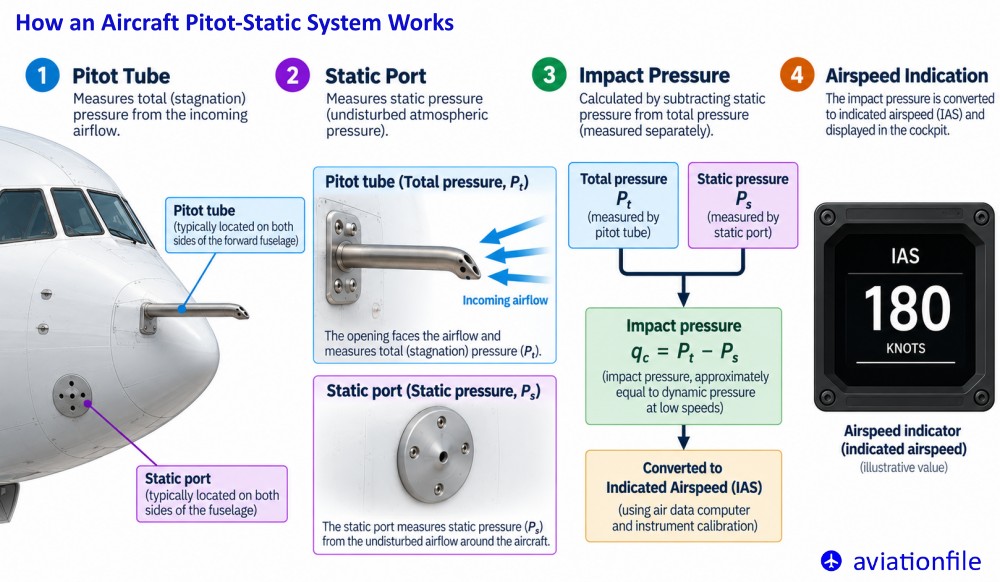
Maintenance and Organizational Factors
Before the accident, the aircraft had remained on the ground for approximately 20 days. Investigators identified maintenance-related shortcomings, including the absence of protective pitot tube covers during this period and the failure to perform a recommended pitot-static system check before returning the aircraft to service. These deficiencies increased the risk of an undetected obstruction and contributed to the circumstances leading to the accident.
Safety Recommendations and Lessons Learned
Following the accident, investigators issued several safety recommendations aimed at preventing similar events. These included improving pilot training in unreliable airspeed recognition, aerodynamic stall identification, and recovery procedures, as well as strengthening cockpit coordination and crew resource management (CRM). The investigation also highlighted the importance of proper aircraft maintenance, particularly the use of pitot tube covers during extended ground periods and appropriate pitot-static system inspections before returning an aircraft to service. The accident demonstrated how technical malfunctions, human factors, and maintenance deficiencies can combine to compromise flight safety.
The Birgenair Flight 301 accident was a tragic event that had a profound impact on the aviation industry. It served as a reminder of the importance of proper maintenance and training procedures in ensuring the safety of air travel. Today, airlines around the world continue to implement new safety measures and procedures to minimize the risk of similar accidents happening in the future.
Sources and Further Reading:
- https://en.wikipedia.org/wiki/Birgenair_Flight_301
- https://simpleflying.com/birgenair-flight-301/
- https://www.faa.gov/sites/faa.gov/files/Birgenair301_Accident_Report.pdf
- https://www.faa.gov/lessons_learned/transport_airplane/accidents/TC-GEN
Featured image source:
By Aero Icarus from Zürich, Switzerland—Birgenair Boeing 757-225; TC-GEN@FRA; 19.10.1994, CC BY-SA 2.0, https://commons.wikimedia.org/w/index.php?curid=26725432