
Not a cafe, but a safety zone! On an aerodrome (airport), a hot spot is a location with a higher risk of collisions between planes or runway incursions. At this point, the concept of Hot Spot emerged. The term Hot Spot is defined by ICAO (ICAO Doc 9870, Manual on the Prevention of Runway Incursions) as follows. “A location on an aerodrome movement area with a history or potential risk of collision or runway incursion, and where heightened attention by pilots/drivers is necessary.”
Therefore, the concept of Hot Spot is extremely important to ensure safety and prevent possible collisions in airport operations. Hot-Spot points can be announced by the relevant airport authority or civil aviation authority by publishing them in the documents.
Sharpened Focus for Safety
- Location: Movement areas like taxiways and runways.
- Increased Risk: Past incidents or potential confusion between pilots and ground vehicles.
- Pilot Awareness: Knowing hot spot locations means extra vigilance when taxiing or taking off.
How are Hot Spots Identified?
Airport authorities analyze past data and potential risks to identify hot spots. Some common factors include:
- Tricky intersections with multiple taxiways
- Areas with poor visibility
- Frequent runway crossings by taxiing aircraft
How are Hot Spots Marked?
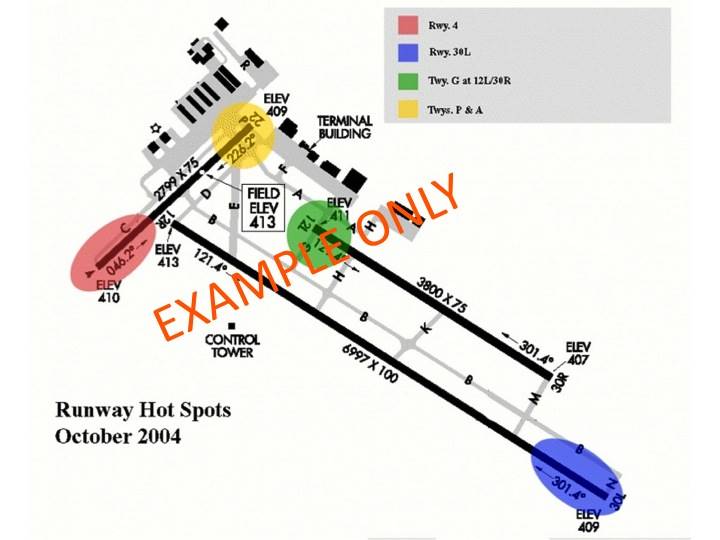
For pilot awareness, hot spots are clearly marked on airport charts and communicated before flights. They typically appear as circles with labels like “HOT1” or “HOT2.”
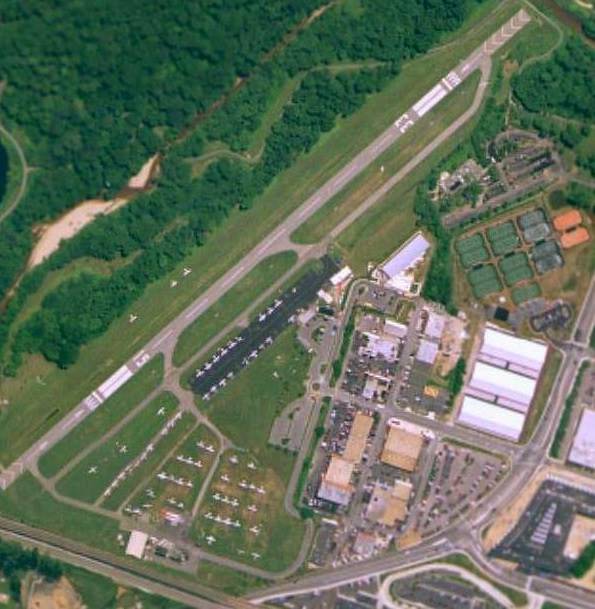
As you can imagine, airports built in the early days of civil aviation had a single runway. For ground operations, there was also a small terminal building, an apron and several taxiways. At this point, you can find the image of Maryland-College Park Airport, which is the oldest airport in the world still in operation.
Civil aviation has developed over the years and the number of flights has increased. Larger airports were built to meet this increasing demand. Airports with multiple runways have increased, apron capacities have increased, and more taxiways are needed to accommodate movements on the ground.
You can find the image of Atlanta Hartsfield Jackson airport, which has been one of the busiest airports in the world in recent years.

On the other hand, one of the stages with the highest operational risk in aviation is operations in airports. Movement on the Airports and the landing and take-off stages of aircraft are the areas where planes come closest to each other.
Why are Hot Spots Important?
By highlighting hot spots, aviation authorities aim to:
- Boost pilot situational awareness (understanding their surroundings).
- Reduce accidents on the airfield.
- Enhance overall airport safety.
ATC / Operational Perspective: Managing Hot Spots
From an operational standpoint, air traffic control (ATC) plays a critical role in mitigating the risks associated with aerodrome hot spots. Controllers actively reduce complexity and ambiguity through precise taxi clearance design, ensuring that routing instructions minimize runway crossings and avoid known high-risk intersections whenever possible.
In situations where pilot workload or aerodrome layout complexity increases, ATC may provide progressive taxi instructions, guiding aircraft step-by-step to prevent confusion, especially at unfamiliar or complex airports. Additionally, strict runway crossing control is essential—controllers must carefully sequence and monitor all movements to eliminate the risk of runway incursions.
These practices are closely linked to broader safety frameworks such as runway incursion prevention programs and advanced systems like Surface Movement Guidance and Control Systems (SMGCS), which enhance situational awareness in low visibility and high-density traffic conditions. Together, these operational layers ensure that hot spots are not only identified but actively managed in real time.
References and Further Reading Links
- Federal Aviation Administration (FAA): Hot Spot Standardized Symbology: FAA hot spot symbology: https://www.faa.gov/newsroom/hot-spot-standardized-symbology
- FAA: Runway Safety: FAA runway safety: https://www.faa.gov/airports/runway_safety (This page also covers hot spots.)
- FAA Airport Diagrams: FAA airport diagrams: https://www.faa.gov/airports/runway_safety/diagrams/