
Have you ever noticed a newly manufactured aircraft with an unpainted fuselage but a fully painted tail displaying the airline’s logo? This distinctive appearance is common during certain stages of aircraft production. But why is the vertical stabilizer often painted before the rest of the airplane?
The answer involves aircraft manufacturing procedures, flight control surface balancing, and aerodynamic safety.
The Importance of Rudder Balance
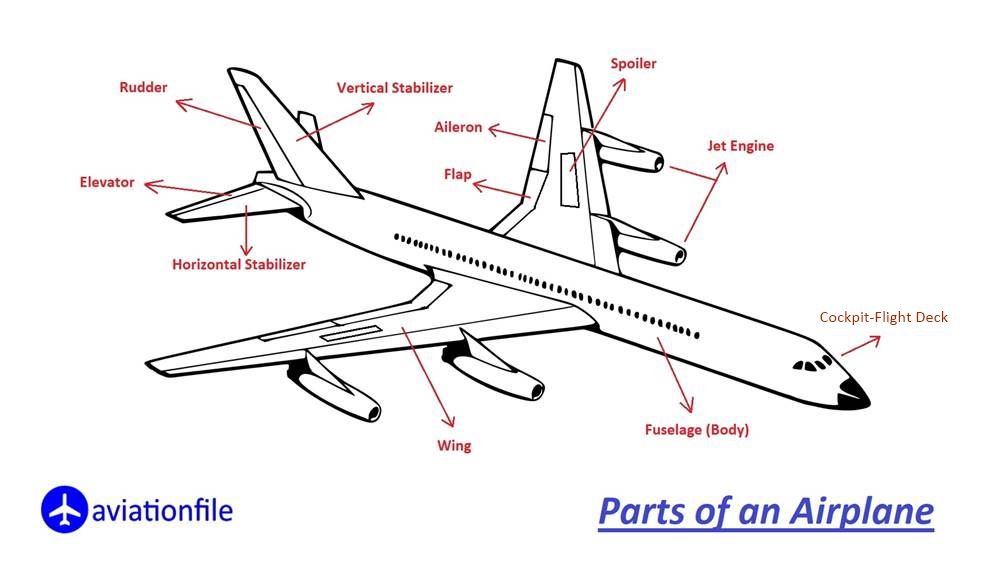
The vertical stabilizer is a fixed aerodynamic surface that contributes to an aircraft’s directional stability. Attached to its trailing edge is the rudder, a movable primary flight control surface used to control yaw.
Unlike the fixed vertical stabilizer, the rudder may require precise mass balancing. Even relatively small changes in its weight distribution, including those caused by additional paint, can affect its balance characteristics.
Aircraft manufacturers therefore follow specific procedures to ensure that flight control surfaces remain within approved balance limits. Depending on the aircraft design and manufacturing process, rudders may be painted and balanced before installation.
Recommended: Parts of an Airplane – Fuselage, Engine, Cockpit…
Why Does Paint Matter?
Aircraft paint is not simply decorative. It provides environmental protection while adding weight to the structure. On movable flight control surfaces, the amount and distribution of this additional weight can be particularly important.
An improperly balanced rudder may increase susceptibility to aeroelastic flutter, a potentially dangerous phenomenon involving dynamic interactions between aerodynamic forces, structural elasticity, and inertia.
According to FAA Advisory Circular AC 43.13-1B, maintaining proper control surface balance is essential when performing repairs or refinishing operations. Excessive paint accumulation can alter the balance of these surfaces and must be carefully controlled.

Why Is the Entire Tail Sometimes Painted First?
Although rudder balancing is an important consideration, it does not mean that every vertical stabilizer must be painted before installation. Manufacturing logistics also influence the painting sequence. Aircraft components may be produced and finished at different facilities before final assembly. Additionally, painting the entire tail section together can help ensure consistent colors and accurate alignment of airline logos across the fixed stabilizer and movable rudder. For example, Airbus announced in October 2012 that the vertical tail plane of its first flyable A350 XWB had been painted before being joined to the aircraft.
However, painting procedures vary between manufacturers and aircraft models. Some aircraft receive their tail livery before final assembly, while others are painted later in the production process.
Final Thoughts
The early painting of aircraft tails reflects a combination of engineering requirements and manufacturing efficiency. The most important technical distinction is that the rudder, rather than the entire fixed vertical stabilizer, requires particular attention to mass balance.